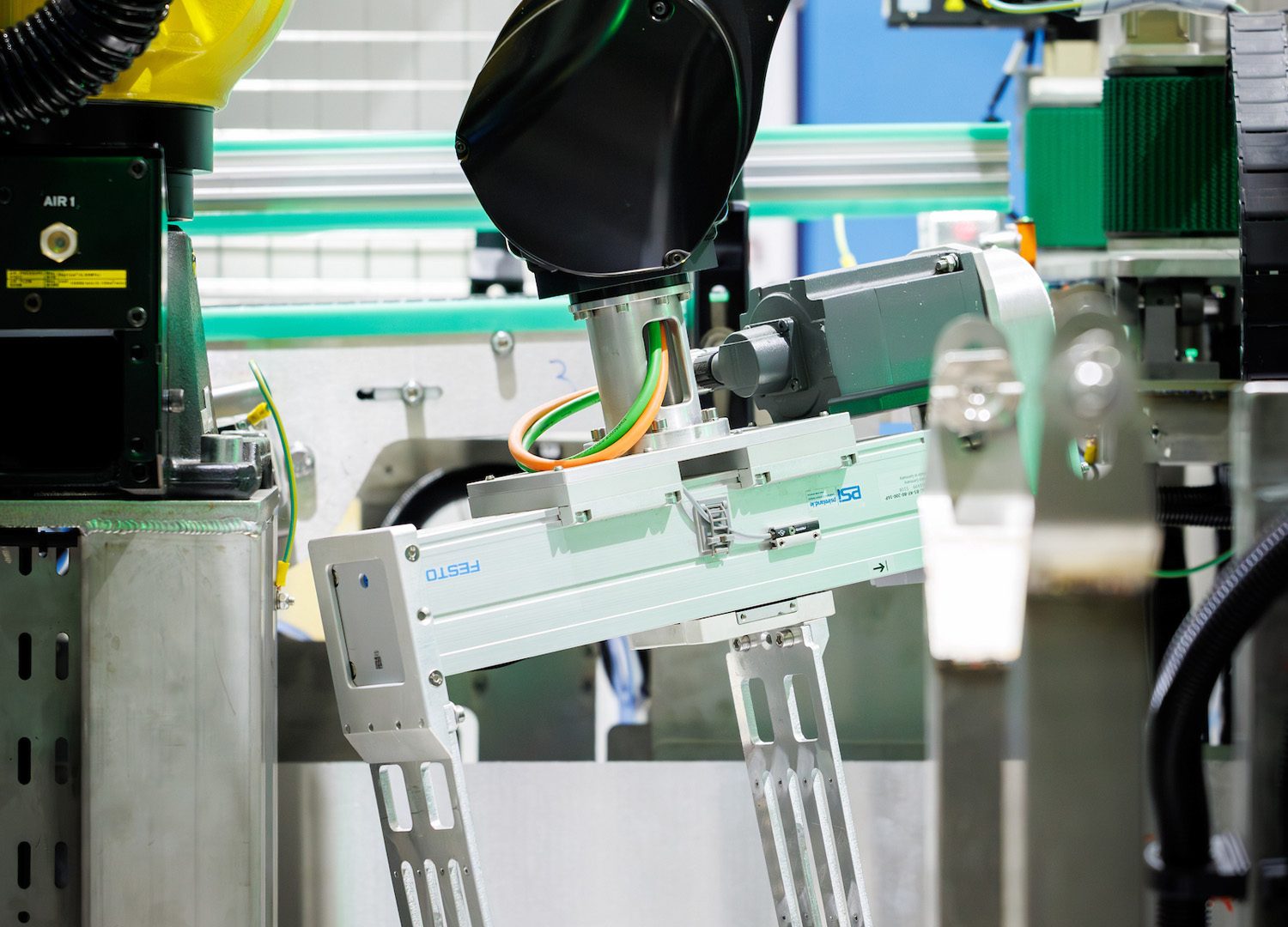
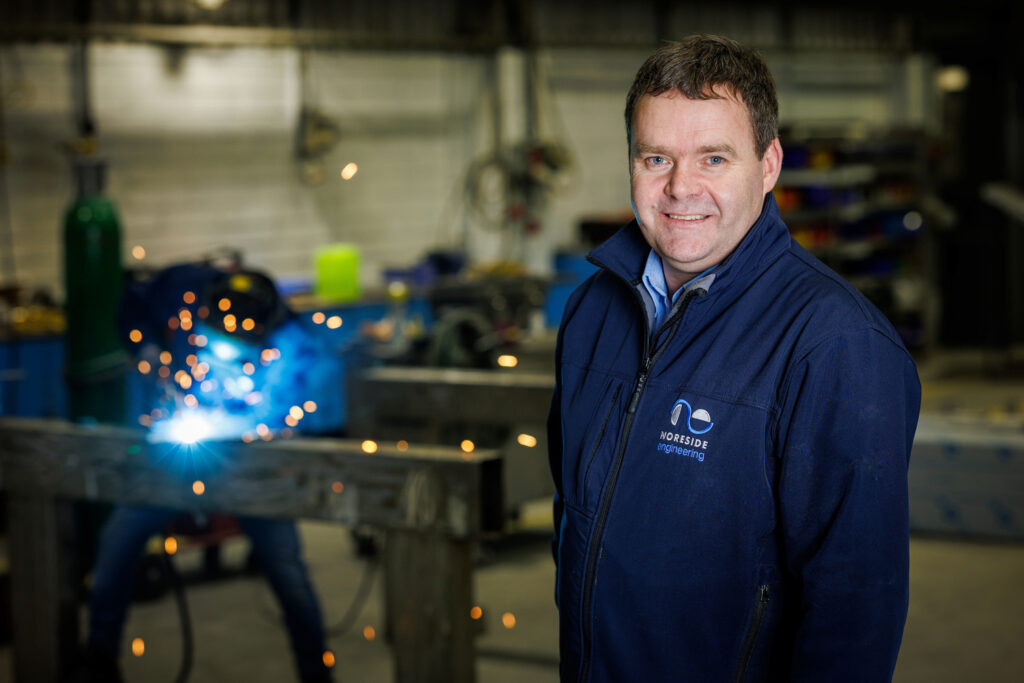
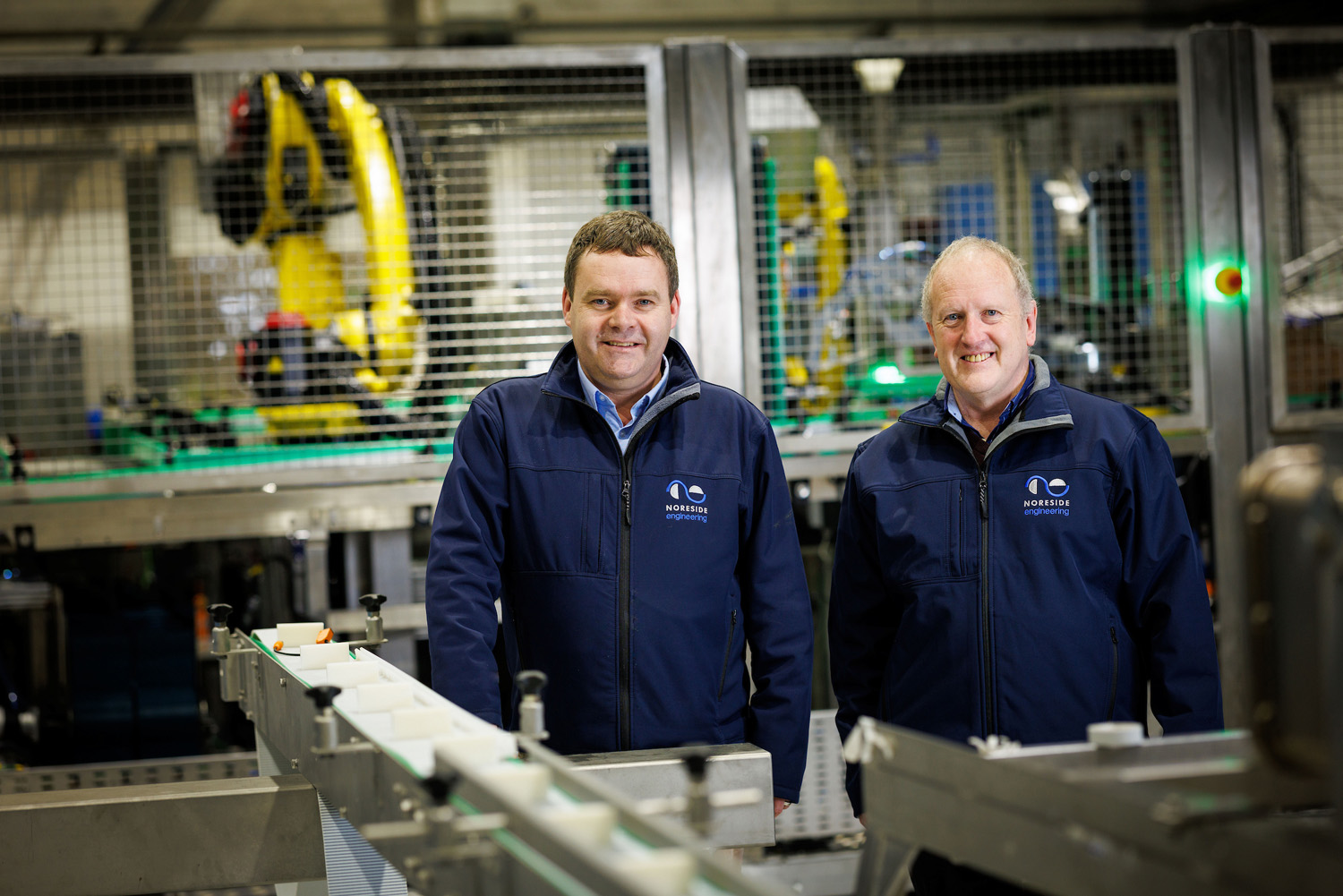
In November 2025, we filmed a series of short videos on site at Noreside Engineering in Kilkenny to share insight into our people, our capabilities, and our direction of travel. In this third instalment, Commercial Director Niall Drennan and Senior Project Manager Brian Phelandiscuss what lies ahead — not only for our business, but for the industries we proudly support.
Investing in Engineering Excellence
As manufacturing environments become more advanced, the demand for precision, reliability, and compliance continues to grow. At Noreside Engineering, ongoing investment in technology, processes, and expertise ensures we remain ready to meet these evolving requirements.
Our focus is firmly on delivering high-performance stainless steel platforms, specialist conveyors, and bespoke fabrication solutions that align with stringent industry standards. Every project is approached with accuracy and care, supporting operational efficiency while helping clients maintain safe and compliant production environments.
Supporting Critical Industries
The food, beverage, and pharmaceutical sectors operate in highly regulated spaces where quality cannot be compromised. Hygienic design, traceability, and consistent performance are essential — and engineering partners must be capable of delivering on all fronts.
By combining technical knowledge with practical project experience, our team works closely with clients to create solutions tailored to their facilities. Whether supporting new builds, expansions, or facility upgrades, our goal is always the same: to provide infrastructure that performs reliably today and scales for tomorrow.
Powered by People
While investment in equipment and innovation is vital, it is our people who truly drive progress. Skilled engineers, project managers, and fabrication specialists collaborate at every stage, ensuring each solution is thoughtfully designed and expertly delivered.
This culture of teamwork allows us to remain agile, respond to complex project requirements, and continue raising the bar for precision engineering.
Engineering the Road Ahead
The future of manufacturing will demand smarter facilities, greater efficiency, and uncompromising compliance. Noreside Engineering is committed to staying at the forefront of that evolution — strengthening partnerships, expanding capabilities, and continuing to engineer solutions that support critical production environments.
Watch the video to hear directly from Niall and Brian as they share their perspective on the opportunities ahead and how Noreside Engineering is helping shape the future of precision engineering.
Noise Attenuation- Engineering a decibel reduction for a Niro Dryer
Noise Attenuation – Engineering a dB Reduction for a Niro Dryer
Industrial drying equipment is essential in food, beverage and pharmaceutical manufacturing — but it often comes with one major challenge: noise. High sound pressure levels from dryer exhaust systems can pose serious compliance, safety and community impact issues if not properly managed.
At Noreside Engineering, we were recently tasked with delivering a bespoke noise attenuation solution for a Niro Dryer chimney outlet that was operating at approximately 120 decibels. Our client required a reduction to 80 decibels, without altering the existing dryer or building structure.
This project called for a fully engineered, turnkey solution — from concept and acoustic modelling through to fabrication and installation.
A Bespoke, Turnkey Noise Reduction System
The brief was clear: design and install a noise attenuation unit that could be fitted directly over the existing chimney outlet while achieving a significant decibel reduction.
Our in-house design team worked closely with an independent acoustic specialist to develop a solution capable of meeting the required sound performance. Using acoustic modelling and real-world operating data, we engineered an attenuation system specifically tuned to the noise profile of the Niro Dryer exhaust.
The final design achieved the target reduction from 120 dB to 80 dB while maintaining airflow performance and operational efficiency.
Engineering, Design and Structural Assurance
To give the client complete confidence in the solution, Noreside supplied a full set of 3D drawings along with a detailed technical report outlining how the attenuation performance would be achieved.
In addition, we produced full structural drawings to ensure the new attenuation unit could be safely supported by the existing building structure. This ensured compliance with structural loading requirements and eliminated the need for costly building modifications.
Where required, the system can also be supplied with a mist dampener fitted to the outlet of the attenuation box, helping to manage exhaust conditions and further improve performance in sensitive environments.
Designed for Compliance and Long-Term Performance
This project highlights Noreside Engineering’s ability to deliver bespoke, compliance-focused solutions for complex industrial challenges. By combining acoustic expertise, mechanical design and structural engineering, we deliver systems that work — and last.
A noise attenuation unit is an engineered enclosure or system designed to reduce sound levels emitted from industrial equipment such as dryers, fans or exhaust chimneys.
Steel Fabrication for Data Centre Construction in Ireland
Steel Fabrication Supporting Ireland’s Expanding Data Centre Infrastructure
Data centre growth and infrastructure demand in Ireland
Ireland’s data centre sector is entering a new phase of structured growth following recent Government approvalfor further development across strategically planned locations. As cloud computing, AI, pharmaceuticals and advanced manufacturing continue to expand, data centres are now recognised as critical national infrastructure.
This growth brings increased demand for robust, precisely engineered construction solutions. For data centre projects, steel fabrication plays a central role in delivering buildings that are resilient, scalable and capable of supporting intensive mechanical and electrical systems over long operational lifespans.
The role of steel fabrication in data centre construction
Modern data centres place exceptional demands on their physical infrastructure. Heavy plant loads, tight build programmes and stringent safety requirements mean that fabricated steel components must be designed and manufactured with absolute accuracy.
Key fabricated steel elements within data centre projects include structural steel supports for plant and energy systems, access platforms and maintenance walkways, equipment frames, and modular assemblies designed for efficient on-site installation. Each component must integrate seamlessly with wider M&E systems while allowing safe access for ongoing inspection and maintenance.
At Noreside Engineering, we understand that data centres are mission-critical environments. Downtime is not an option, and build quality directly impacts long-term performance and operational reliability.
Interesting Statistics on Data Centers in Ireland
Electricity demand from data centres has grown from 5% of national electricity demand in 2015 to 22% in 2024.
Data centres only employ around 21,000 people in Ireland, while consuming 22% of the country’s metered electricity.
Noreside Engineering’s fabrication capability for data centres
Noreside Engineering delivers specialist steel fabrication solutions tailored to the needs of data centre construction. We manufacture both stainless steel and steel assemblies to meet demanding project specifications. We focus on consistency, traceability and dimensional accuracy.
Our team works closely with main contractors, consulting engineers and M&E specialists to ensure fabricated steelwork is practical to install, compliant with relevant European standards, and aligned with accelerated construction programmes. Where required, fabrication is designed to support modular build strategies, helping reduce on-site labour, improve safety and shorten overall project timelines.
CSA stands for Civil, Structural, and Architectural. These services cover everything from earthworks and concrete bases to steel frameworks and interior finishes.
We design and build with redundancy and resilience in mind, using robust materials, precision fabrication, and rigorous testing to meet tier standards and client specifications.
Absolutely. Our teams have supported major hyperscale projects across Ireland and mainland Europe, delivering fast-track CSA & MEP packages in line with international standards.
We combine in-house engineering with on-site coordination, using digital tools like BIM to streamline communication and eliminate rework—saving time and cost.
Visit our contact page: www.noresideengineering.com/contact-us or connect with us on LinkedIn: Noreside Engineering Group
Building resilient digital infrastructure
As Ireland balances digital growth with energy planning and sustainability objectives, data centre construction is becoming increasingly regulated and technically complex. Projects require engineering partners who understand compliance-driven environments and can deliver dependable fabrication at scale.
Noreside Engineering supports the delivery of next-generation data centre facilities with steel fabrication solutions built for strength, precision and long-term certainty.
Mechanical and Automation SLAs for Conveyor Systems | Noreside Engineering
Mechanical and Automation SLAs for Conveyor and Process Systems
Why SLAs Matter in Regulated Manufacturing Environments
In food, beverage and pharmaceutical manufacturing, uptime is not optional. Conveyor systems and automation assets operate as part of validated, compliance-driven processes where unplanned downtime can quickly become a production, quality or audit issue. A well-defined Service Level Agreement helps ensure mechanical and automation systems are maintained, supported, and repaired when you need them, within agreed response times.
At Noreside Engineering, mechanical and automation SLAs are offered as a continuation of how we already support our customers. The difference is structure, accountability and long-term planning rather than reactive call-outs.
Standard Conveyor Mechanical Maintenance SLAs
Our mechanical SLAs cover routine and preventative maintenance for conveyor systems and associated mechanical assets. These agreements are tailored to site usage, hygiene requirements and production schedules.
Typical mechanical SLA coverage includes scheduled inspections, wear and component checks, belt tracking and tensioning, bearing and drive system assessment, hygienic condition checks for food and beverage environments, and documented service reports for quality and audit records. All maintenance is carried out with an understanding of EHEDG principles, GMP environments and cleanability requirements.
The goal is simple: reduce breakdown risk, extend asset life and ensure equipment remains fit for purpose in regulated production settings.
PLC and HMI Automation SLAs Under a 12-Month Contract
In addition to mechanical support, Noreside Engineering offers PLC and HMI automation support under a structured 12-month SLA. This is particularly valuable for sites where internal controls expertise is limited or where automation systems are business-critical.
Automation SLAs can include remote support, fault diagnostics, program backups, controlled software changes, HMI updates, and support during audits or production changes. Our response times and support hours are agreed upfront. This helps to provide you with the clarity for engineering and operations teams.
This approach ensures automation systems remain stable, documented and supported by engineers who understand both the mechanical process and the control architecture.
One Engineering Partner, Full System Accountability
A key advantage of Noreside’s SLA offering is single-partner responsibility. Mechanical, electrical and automation support sits under one engineering organisation, reducing finger-pointing and speeding up fault resolution. We’ve designed our SLAs to be clear and practical, reflecting the day-to-day realities of high-compliance manufacturing across Ireland and Europe.
A mechanical SLA is a structured service agreement covering the ongoing maintenance and support of mechanical equipment such as conveyors, platforms and associated systems. It defines scheduled maintenance activities, response times and reporting, helping reduce unplanned downtime and extend equipment life.
Our mechanical SLAs typically cover conveyor systems, stainless steel platforms, guarding and related mechanical components. Coverage is tailored to the specific installation, operating hours and hygiene requirements of each site.
Maintenance frequency is agreed during the SLA setup and is based on equipment usage, process criticality and regulatory environment. This can include monthly, quarterly or site-specific inspection and service schedules.
Yes. All scheduled maintenance visits are documented, with service reports suitable for quality, hygiene and audit purposes in food, beverage and pharmaceutical environments.
Automation SLAs typically include remote and on-site support, fault diagnosis, PLC and HMI program backups, controlled software changes, system health checks and agreed response times. The exact scope is defined within the 12-month contract.
While many customers choose SLAs for systems originally designed and installed by Noreside, we can also support existing PLC and HMI systems following an initial technical review.
Combining both under one SLA provides single-point accountability for the full system. Mechanical and automation issues are addressed together, reducing downtime, speeding up fault resolution and avoiding handover between multiple suppliers.
Response times are agreed upfront as part of the SLA. This gives operations and engineering teams clarity on support availability and escalation processes.
Yes. All SLAs are site-specific and aligned to production schedules, compliance requirements and operational risk. Noreside does not offer generic, one-size-fits-all agreements.
Noreside’s SLAs are designed for regulated manufacturing environments, particularly food, beverage and pharmaceutical production where hygiene, reliability and documentation are critical.
The process starts with a site review and discussion around equipment, operational priorities and support expectations. From there, a tailored mechanical, automation or combined SLA is proposed.
Talk to Noreside About the SLA Support We Offer
Whether you require routine conveyor maintenance, automation support, or a combined mechanical and PLC/HMI SLA, Noreside Engineering can structure an agreement that fits your operation.
Keyence Vision System Elevates Pharmaceutical Automation
Noreside Engineering, based in Kilkenny, Ireland, designs, manufactures, and installs specialist automation and materials handling systems for food, beverage, and pharmaceutical manufacturers across Ireland and Europe.
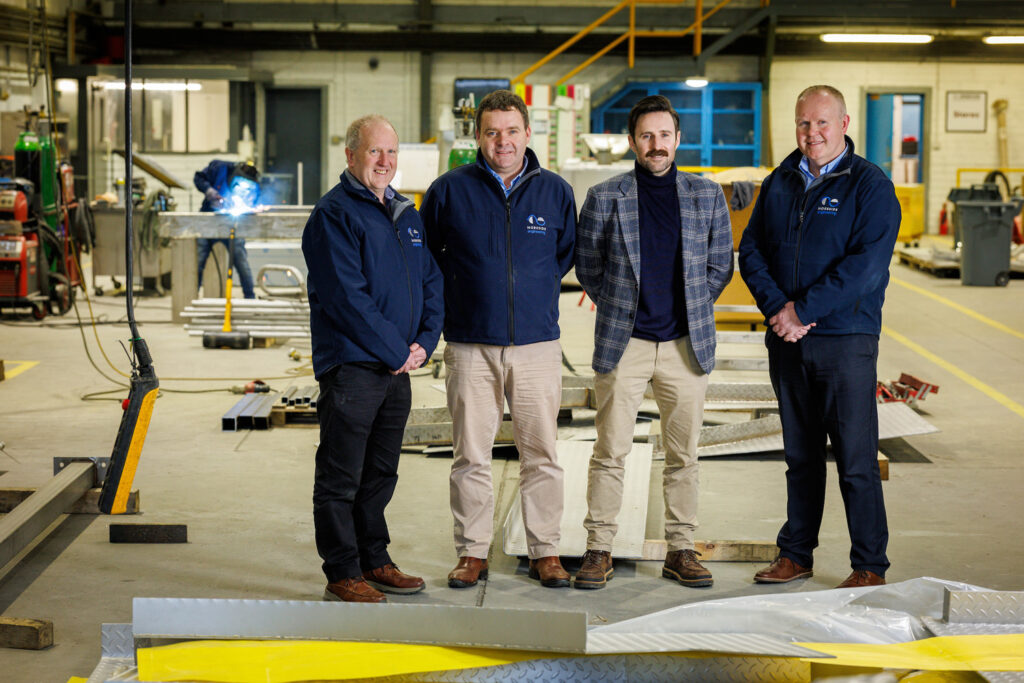
Known for tackling complex automation challenges, the team specialises in systems where accuracy, repeatability, and regulatory compliance are essential.
For a recent pharmaceutical project, Noreside Engineering developed a compact automated inspection and handling cell designed to reliably identify very small components and place them at high speed—all within a controlled, GMP-aligned production environment.
“Our customer wanted confidence in a system that would stand up to real pharmaceutical production,” explains Johan van Eyk, Robotics Division Lead at Noreside Engineering. “That means consistent performance, clear data, and a design approach that supports validation and long-term use—not just something that works on day one.”
Seeing small parts clearly—every time
At the heart of the system is a Keyence CV-X visionplatform with a 5-megapixel camera, capable of reliably identifying parts as small as 2 mm × 4 mm. Using advanced pattern recognition, the system can locate components even when they arrive in different orientations or positions—perfect for high-throughput pharmaceutical applications.
Components are presented using an ATC vibrating Flexibowl, which gently singulates parts in random orientation. The CV-X vision system identifies each part, calculates its exact X, Y, and rotation coordinates, and sends this information directly to a Fanuc robot. The robot then performs a fast, accurate pick-and-place operation, positioning each component precisely where it needs to go.
Because the process is fully automated and non-contact, operator involvement is reduced and the risk of contamination is minimised—key advantages in pharmaceutical manufacturing.
The speed and flexibility of the CV-X system were major reasons for its selection. Even when processing high-resolution images, the system delivers results in real time. This allows the robot to work at full speed without waiting for data.
The CV-X platform also supports multiple cameras from a single controller, making it easy to expand the system in the future.
The system supports additional checks, new product variants, and extra process steps without requiring a full machine redesign.
Just as importantly, the system integrates easily with open, industry-standard controls. This gives users full visibility of inspection data, simple parameter access, and a system that is easier to document, validate, and adapt over time.
Fast, flexible, and validation-friendly
By combining high-speed vision processing with coordinated robot motion, the system completes inspection and handling tasks in seconds. This supports batch testing and continuous production without slowing throughput.
Noreside Engineering deliberately avoids closed or restrictive platforms, ensuring customers retain control of their systems long after commissioning. This open approach makes future upgrades, process changes, and validation activities far more straightforward.
“As automation in pharma continues to evolve, flexibility is just as important as accuracy,” Johan adds. “Manufacturers want systems that integrate cleanly with robotics, providing transparent access to data, and can be adapted as processes change. That’s why platforms like Keyence CV-X work so well. They deliver the performance we need today, while keeping options open for tomorrow.”
A reliable solution for pharmaceutical manufacturing
The completed system delivers a robust, repeatable, and easy-to-use automation solution. It supports quality assurance, reduces operator dependency, and offers long-term flexibility.
For Noreside Engineering, the project highlights how Keyence CV-X vision technology can turn complex pharmaceutical automation challenges into future-ready solutions.
To speak to Noreside Engineering about our Keyence products, contact us here
Bead Blasting for Food, Beverage and Pharmaceutical Stainless Steel Fabrication
In food, beverage, and pharmaceutical manufacturing, surface finish is not just about appearance. It plays a critical role in hygiene, cleanability, corrosion resistance, and long-term equipment performance. At Noreside Engineering, bead blasting is delivered as a precision finishing service designed specifically for stainless steel fabrications used in regulated, hygiene-critical environments.
Our bead blasting capability supports manufacturers who require consistent, repeatable surface finishes that align with GMP, HACCP, and EHEDG principles, ensuring fabricated equipment is suitable for clean and controlled production settings.
What Is Bead Blasting in a Hygienic Engineering Context?
Bead blasting is a surface treatment process where fine glass beads are propelled at controlled pressure onto stainless steel components. The impact cleans and uniformly textures the surface without cutting or aggressively removing material.
For hygienic industries, bead blasting is used to • Remove fabrication marks, heat tint, and light surface contamination • Create a consistent satin-like finish • Improve cleanability by reducing surface irregularities • Prepare surfaces for hygienic service without compromising material integrity
Unlike harsher blasting methods, bead blasting preserves the corrosion resistance of stainless steel when carried out correctly, making it suitable for food-grade and pharmaceutical applications.
Why Surface Finish Matters in Food, Beverage and Pharma Fabrication
In regulated manufacturing environments, poor surface finishes can create crevices where bacteria, product residue, or cleaning chemicals can accumulate. This increases the risk of contamination, corrosion, and cleaning inefficiency.
Noreside’s bead blasting service supports • Hygienic design requirements • Efficient clean-in-place and washdown processes • Reduced risk of microbial harbourage • Consistent visual and functional quality across fabricated assemblies
This is particularly important for platforms, frames, conveyors, access systems, guards, and ancillary equipment used in high-care production areas.
Noreside Engineering’s Bead Blasting Capability
At Noreside Engineering, bead blasting is not treated as a cosmetic add-on. It is fully integrated into our stainless steel fabrication workflow.
Our service offering includes • Controlled bead blasting of stainless steel fabrications • Consistent finishes across welded and non-welded areas • Preparation suitable for hygienic environments • Integration with fabrication, welding, and assembly processes • Application across small components through to large fabricated structures
Because bead blasting is carried out with a full understanding of how equipment will operate in production, finishes are specified to suit real-world cleaning and operating conditions.
Applications Across Food, Beverage and Pharmaceutical Facilities
Noreside’s bead blasting service is commonly applied to • Stainless steel platforms and access systems • Conveyor frames and supports • Process equipment frames and housings • Washdown and high-care area fabrications • Bespoke stainless steel assemblies
Each application is assessed based on hygiene risk, cleaning regime, and operational environment to ensure the finish is appropriate and compliant.
Quality, Consistency and Compliance
Consistency is critical in regulated industries. Noreside Engineering applies bead blasting with repeatability in mind, ensuring fabricated equipment meets both visual and functional expectations across entire production lines or facilities.
Our approach supports • GMP-aligned fabrication standards • EHEDG-informed hygienic design principles • Long-term durability in aggressive washdown environments • Reduced rework and surface-related issues after installation
The result is stainless steel equipment that cleans effectively, performs reliably, and maintains its finish over time.
FAQ: Bead Blasting for Food, Beverage and Pharmaceutical Fabrication
Primarily stainless steel fabrications used in food, beverage, and pharmaceutical environments, including frames, platforms, conveyors, guards, and bespoke assemblies.
Yes. When applied correctly, bead blasting creates a uniform, cleanable surface suitable for hygiene-critical areas and supports GMP and HACCP requirements.
Primarily stainless steel fabrications used in food, beverage, and pharmaceutical environments, including frames, platforms, conveyors, guards, and bespoke assemblies.
Yes. When applied correctly, bead blasting creates a uniform, cleanable surface suitable for hygiene-critical areas and supports GMP and HACCP requirements.
Bead blasting produces a uniform satin finish rather than a high-gloss surface. It is often selected where cleanability, consistency, and reduced glare are preferred.
Inside a Precision Robotic Automation Cell at Noreside Engineering
At Noreside Engineering, robotic automation is engineered as part of a complete system, bringing robotics, fabrication and process expertise together from design through to integration. Our latest robotic automation cell is a strong example of this approach.
The system featuresFANUC SR-3A SCARA robots alongside an LR Mate 200iD, integrated into a robust stainless steel structure fabricated and assembled in-house by our skilled engineering team.
SCARA robots deliver faster, consistent, and reliable output – ensuring precision and efficiency for your cleanroom operations. In this cell, the FANUC SR-3A robots are used where speed, repeatability and positional accuracy are critical. Their compact footprint and high-speed motion make them ideal for pick-and-place, assembly and transfer tasks in controlled manufacturing environments.
Complementing the SCARA robots is the FANUC LR Mate 200iD, a versatile six-axis robot suited to tasks requiring greater reach and flexibility. Its ability to handle complex movements allows the cell to manage multiple process steps while maintaining accuracy and consistency throughout the cycle.
What differentiates this project is not just the robotics, but the engineering behind them. Every frame, guard, mount and interface has been precision welded and finished by our fabrication team. Stainless steel construction ensures durability, cleanliness and long-term performance, particularly important for food, beverage and pharmaceutical applications where hygiene and compliance are non-negotiable.
Our engineers work closely across disciplines, from robotic programming and mechanical design through to fabrication and installation. This integrated approach reduces risk during commissioning, improves system reliability and ensures the automation performs exactly as intended once it reaches the customer’s site.
The automation cell has been designed with maintainability and future expansion in mind. Clear access points, structured cable routing and modular design allow for easier servicing and potential upgrades as production demands evolve. This forward-thinking design philosophy helps protect long-term investment while supporting operational flexibility.
At Noreside Engineering, automation is about more than speed or throughput alone. It is about building systems that are repeatable, reliable and engineered to suit the real-world demands of regulated manufacturing environments. This robotic automation cell reflects our commitment to precision, quality and engineering excellence at every stage of the process.
The cell uses FANUC SR-3A SCARA robots and a FANUC LR Mate 200iD. Each robot type is selected based on task requirements such as speed, accuracy, reach and flexibility.
SCARA robots deliver faster, consistent, and reliable output – ensuring precision and efficiency for your cleanroom operations. They are ideal for high-speed, repeatable tasks where accuracy and consistency are critical.
The LR Mate 200iD provides six-axis flexibility, allowing the system to handle more complex movements, orientation changes and multi-step processes within the same automation cell.
Yes. The system is designed and built for food, beverage and pharmaceutical environments, with a strong focus on hygienic design, cleanability and robust stainless steel construction.
Yes. All structural fabrication, including precision welding, is completed by Noreside Engineering’s skilled in-house team. This ensures full control over quality, tolerances and finish.
Every automation cell we build is bespoke. Robot selection, layout, guarding, interfaces and control systems are tailored to suit specific process requirements and site constraints.
Yes. Modular design principles are used to allow for future upgrades, additional process steps or changes in production volume without the need for a complete rebuild.
Noreside Engineering manages the full lifecycle, from design and fabrication through to installation, commissioning and handover, ensuring continuity and accountability throughout the project.
Boosted Efficiency: Noreside Engineering & Quimarox Optimise Production in Ireland
Noreside Engineering & Quimarox Optimise Production in Ireland
Noreside Engineering is proud to announce the successful implementation of a high-performance vertical transport solution for a leading Irish beverage manufacturer. By integrating the Qimarox Prorunner mk5 into a custom-built stainless steel conveyor system, we have helped our client overcome production bottlenecks, significantly increasing speed, efficiency, and workplace safety. Read on to discover how Noreside Engineering & Quimarox Optimise Production in Ireland.
The Challenge: Manual Handling and Production Delays
Due to a surge in market demand, the manufacturer expanded its production capacity, which placed immense pressure on existing floor-level processes. Previously, moving cardboard beverage packaging to elevated processing levels relied heavily on manual labor and forklifts. This created several critical issues:
Inefficiencies: Slow throughput led to stagnation in the supply chain.
Safety Risks: Increased forklift traffic and manual lifting elevated the risk of workplace accidents.
Space Constraints: Forklift maneuvers required significant floor space that could be better utilized for production.
The Solution: Precision Engineering Meets Proven Technology
As a Kilkenny-based system integrator with over 30 years of experience, Noreside Engineering designed a bespoke stainless steel conveyor system tailored to the stringent hygiene requirements of the food and beverage industry.
At the heart of this system is the Qimarox Prorunner mk5, a continuous vertical conveyor renowned for its reliability. Our team managed the full project lifecycle, ensuring the modular system integrated seamlessly with existing lines while adhering to GMP and EHEDG standards.
Key Benefits of the Prorunner mk5 System
High Throughput: Continuous vertical movement ensures a constant flow of goods without the “stop-start” delays of traditional lifts.
Hygienic Design: Constructed entirely from stainless steel, making it ideal for beverage production environments.
Compact Footprint: The vertical design reclaimed valuable floor space previously lost to ramps or forklift paths.
Energy Efficient: Low power consumption and minimal maintenance requirements ensure a low total cost of ownership.
Measurable Results
Since the installation, the manufacturer has reported a seamless flow from the packaging floor to final palletisation. By automating vertical transport, the facility has achieved a safer working environment and a more resilient supply chain.
The Prorunner mk5 is a continuous vertical conveyor that moves products between different levels using a patented circulating carrier system. Unlike traditional lifts, it provides a constant flow of goods, making it ideal for high-volume production.
Absolutely. By removing the need for manual handling and reducing forklift traffic in tight areas, the Prorunner mk5 significantly enhances workplace safety. Furthermore, our installations comply with all relevant European and Irish safety regulations.
Yes. We offer comprehensive support throughout the installation's lifecycle, including design, implementation, routine maintenance, and overhauls to ensure your facility remains operational 24/7.
From Apprentice to Automation Engineer: Victor Murray’s story
Automation Apprenticeships at Noreside Engineering: Victor Murray’s story
Can you tell us a bit about your background and how you ended up at Noreside Engineering?
I originally started out doing more traditional industrial site work. A lot of it was basic power distribution on building sites – sockets, lighting, SWA terminations, that kind of thing. When the opportunity came up to move into an automation apprenticeship at Noreside Engineering, it felt like a big step, but also a really exciting one. I knew it was a chance to learn a completely new side of the trade.
What was the biggest change for you moving into automation?
The environment, without a doubt. Going from building sites into a controlled factory setting was a huge shift. Suddenly I was working on complex machines and conveyor systems, wiring control panels with components I’d never seen before, aligning sensors from CAD drawings and working closely with fitters, programmers and welders. It was a completely different way of working and thinking.
How did you feel at the start?
A mix of excitement and nerves. I was delighted to be learning something new and working on more advanced projects, but it was definitely intimidating at the beginning. Seeing a fully wired automation control panel for the first time, or a three-metre-tall robotic arm moving at speed, really puts things into perspective. That said, it also made me want to understand how it all worked and how I could get to that level myself.
What was the learning curve like?
Steep, if I’m honest. At the start, I felt like a fish out of water. I wasn’t familiar with the components in the panels, different sensor types, motors, power supplies, safety relays or VFDs. My own work also wasn’t at the standard required initially, so I spent a lot of time redoing tasks to get them right and to meet the engineers’ specifications. It was challenging, but it was all part of the learning process.
How has Noreside Engineering supported you through that?
The support has been brilliant. Everyone is approachable and willing to help. If you don’t understand something, someone will always take the time to explain it. Looking back, I probably could have asked more questions at the start, but I quickly realised that the team genuinely wants apprentices to learn and improve. That support makes a massive difference.
Where are you at now in your apprenticeship?
I’m at a point now where I’m very comfortable wiring control panels to a high standard and understanding how all the components function together. I’m regularly trusted with my own electrical projects on machines and conveyors, including selecting components and cables myself. I’ve become very proficient in control wiring, which is something I wouldn’t have imagined when I first started.
What do you enjoy most about the apprenticeship programme?
The variety and the level of involvement. You’re not just doing one small task over and over. You get exposure to the full process – from having input at the design stage, to ordering switchgear and components, building and testing machines, and finally installing them on site as part of a production line. It makes the work really rewarding because you see projects through from start to finish.
If you could give advice to someone starting out, what would it be?
Do some research into automation before you start and try to understand how the different components work together. Most importantly, don’t be afraid to ask questions. I learned quickly that everyone at Noreside is there to help, and asking questions only helps you improve faster.
Looking ahead, how do you see your future in automation?
Automation was absolutely the right career choice for me. What was once a very daunting environment is now something I genuinely enjoy every day. I can’t see myself doing anything else. The work is challenging, interesting and constantly evolving, and the apprenticeship at Noreside has played a huge part in getting me to this point.
Noreside Engineering Automation Apprenticeships are linked with
The Future of Precision Engineering at Noreside Engineering
Last month, we spent time on site in Kilkenny filming a series of short videos with our team at Noreside Engineering. The aim was simple: to give a clear, honest view of where we are going as a business and how we see the future of precision engineering evolving across the industries we serve.
This first video features Gavin Mahony Operations Manager, Michael Gibbs Senior Project Manager. The series focuses on our people. It captures their perspective on growth, innovation and the responsibility that comes with supporting compliance-driven sectors such as food, beverage and pharmaceuticals.
Investing in the Right Kind of Growth
As Noreside Engineering continues to grow, our focus remains on doing so in a considered and sustainable way. Investment in precision engineering is not just about new equipment or expanded capacity. It is about repeatability, accuracy and building systems that perform consistently in regulated environments.
Our team understands the importance of hygienic design, robust materials and engineered solutions that align with European standards such as GMP, EHEDG and ISO requirements. These are not optional extras for our clients; they are fundamental to safe, efficient and compliant production.
Supporting Food, Beverage and Pharmaceutical Manufacturers
The food, beverage and pharmaceutical sectors demand a level of precision and reliability that goes beyond general manufacturing. From specialist conveyors to stainless steel platforms, every solution we deliver must integrate seamlessly into existing processes while supporting throughput, safety and long-term performance.
In the video, our team speaks about working closely with clients to understand their operational challenges. That collaboration allows us to design and manufacture systems that are not only fit for purpose today but capable of supporting future expansion and process optimisation.
Our People, Our Direction
At the centre of Noreside Engineering is our team. Their experience, technical expertise and attention to detail shape everything we do. Hearing directly from them offers a genuine insight into our direction as a business and the values that guide our work.
This video series is just one way we are opening up the conversation about what precision engineering means to us and how we plan to continue supporting high-end manufacturing environments across Ireland and beyond.
A Day Celebrating Ireland’s Apprenticeship Community
R to L Niall Drennan, Brenda Meaney, Patricia Nolan
Last week, the Noreside Engineering team attended the Apprentice of the Year Awards at the Gibson Hotel in Dublin. While we didn’t take home an award this year, the event offered something just as valuable: new ideas, fresh inspiration and a clearer vision for how we can continue improving the apprenticeship experience within our organisation.
Learning From Ireland’s Best Apprenticeship Employers
The awards brought together employers, educators, mentors and apprentices from across the country to celebrate excellence in apprenticeship training. It was a powerful reminder of how important structured, supported learning is in building Ireland’s future engineering and manufacturing workforce.
For Noreside Engineering, the event reinforced our commitment to enhancing every stage of the apprenticeship journey. From onboarding and hands-on technical training to mentoring and long-term career pathways, we want every apprentice who joins our team to feel supported, valued and equipped to succeed.
Strong Partnerships Driving Skills Development
Apprenticeships thrive when industry and education work together. We are proud to collaborate with national and regional partners who help shape and deliver high-quality training programmes across Ireland.
These organisations play a vital role in supporting apprentices, employers and training centres, ensuring the skills taught today align with the needs of tomorrow’s industries.
Looking Ahead With Renewed Energy
Although we didn’t win an award this time, the event was a valuable opportunity to reflect on what truly matters: developing people, nurturing talent and helping shape the next generation of skilled engineers in Ireland.
Congratulations to all the nominees and winners who continue to inspire progress across the apprenticeship community. With new ideas and renewed motivation, Noreside Engineering is already looking ahead to next year’s awards with even greater ambition.
How IBC Washing Works: High-Pressure Jetting, Tipping and Drying Explained
In industries where hygiene and consistency cannot be compromised, the way an IBC is washed matters. At Noreside Engineering, we design and manufacture IBC washing systems for food, beverage and pharmaceutical clients across Ireland. Each system is engineered to deliver reliable, repeatable cleaning that meets rigorous European hygiene expectations and supports seamless production workflows.
High-Pressure Spray Nozzles
The wash process begins with high-pressure spray nozzles designed to reach deep into corners, seams and internal surfaces of the container. These nozzles deliver precise, controlled jetting to break down residues and remove stubborn product build-up. By combining pressure, angle and coverage, the system achieves a consistent internal clean every time, ensuring the container is ready for re-use without contamination risks.
Full Jetting Cycle Coverage
Our wash cycles are designed to be thorough and efficient. The internal spray pattern is engineered to reach all areas of the IBC, including hard-to-access points where residues can accumulate. This makes the process ideal for applications where hygiene is paramount and cross-contamination cannot be tolerated. For operators, the automated cycle keeps the process safe, predictable and highly reliable.
Download our brochure
Automated Tipping and Draining
Once the jetting stage is complete, the IBC is automatically tipped. This step ensures all internal contents and wash water are fully drained. By eliminating manual lifting or handling, the system improves safety while achieving a cleaner, more efficient workflow. The tipping mechanism positions the container at the optimal angle for quick and complete emptying, preparing it for drying.
Drying and Final Preparation
After draining, the IBC enters the drying stage. Controlled air circulation removes remaining moisture and leaves the container ready for immediate return to production. Drying is a crucial step for food and pharmaceutical manufacturers, as moisture left inside a container can compromise product quality or lead to operational delays.
Engineering for Hygiene and Repeatability
Every IBC washing system we build is manufactured using stainless steel and hygienic design principles. Our team has extensive experience working with compliance-driven clients, allowing us to engineer solutions that meet your operational, environmental and regulatory needs.
An IBC Washing System is an automated station designed to clean Intermediate Bulk Containers (IBC's) using controlled water pressure and detergents. Noreside Engineering is the leading manufacture of these machines for food and pharmaceutical customers in Ireland. Our systems ensure every container is cleaned to the same standard.
They are used by food producers, beverage manufacturers, dairy plants, pharmaceutical companies and any facility that relies on clean bulk containers for ingredients or liquids.
The key advantages include improved hygiene, reduced labour, consistent cleaning quality, lower water and chemical usage, faster turnaround times and predictable cleaning cycles.
Automated systems run validated wash cycles with controlled pressures, temperatures and timings. This removes human error and ensures each clean meets the same standard every time.
Savings vary by site, but most facilities reduce labour hours significantly and lower water and chemical usage. These reductions usually lead to a fast payback period and long-term operational savings.
Yes. Every system we produce is custom-designed to suit the customer’s IBC sizes, cleaning requirements, site layout and available utilities. Noreside engineers build each system to order.
We are one of Ireland’s leading specialists in stainless steel machinery and compliance-driven equipment. Our engineers have extensive experience in designing and building washing systems that meet the hygiene and operational needs of regulated industries. We offer complete design, build, installation and aftercare from our engineering hub in Kilkenny.
A 3D Walkthrough of an IBC Washing Machine: Precision Engineering Brought to Life
3D design has become an essential part of modern engineering, but when it comes to hygiene-critical machinery like IBC Washing Systems, the level of accuracy required goes far beyond basic visualisation. At Noreside Engineering, our 3D walkthroughs allow customers to experience their IBC washing machine long before it reaches the factory floor. This gives them a clear understanding of layout, access points, interfaces and performance-driven details that matter in food, beverage and pharmaceutical environments.
A 3D walkthrough is more than a preview. It is a complete representation of the final machine as it will be built. Every component, hinge, pipe connection, guard and wash lance is modelled to millimetre precision. This means the customer can see exactly how the machine will fit into their production area, how operators will interact with it and how maintenance access has been engineered from day one.
Engineering Every Detail to Millimetre Accuracy
The value of a 3D walkthrough comes from the accuracy behind the model. Our engineers design every IBC Washing System using full 3D CAD assemblies based on real-world dimensions. Frames, valves, spray nozzles, pumps, door seals, PLC enclosures and drain points are all positioned and validated within the model.
This meticulous approach allows us to eliminate clashes, avoid surprises during installation and ensure that every unit is built exactly as designed. It also means the customer sees the machine as it will be manufactured, complete with the precision needed to achieve reliable, repeatable operation.
For facilities with tight space, complex hygiene zoning or existing equipment nearby, the ability to virtually walk through the system is invaluable. It allows planning teams to sign off with confidence, reducing installation time and removing uncertainty.
Download our brochure
From Digital Model to Turnkey Installation
Because our models reflect the final build, once an IBC Washing System reaches the customer’s site the installation process is significantly smoother. The machine arrives fully fabricated, wired, tested and ready to run. Customers often describe it as a turn-the-key experience: connect services, run validation checks and begin cleaning.
This level of readiness is the direct result of our detailed 3D design workflow. The walkthrough video is not just a visual tool; it is an exact blueprint for manufacturing, assembly and commissioning. When the unit is on the factory floor, every component is working because of the detail in the virtual environment.
Why Precision Matters for IBC Washing Systems
In hygiene-critical production, small inaccuracies can lead to inconsistent cleaning, wasted water, difficult maintenance and avoidable downtime. Millimetre precision ensures wash patterns being consistent and spray coverage is valid. The mechanical motion of doors and lances operates flawlessly.
The more predictable the machine, the more predictable the hygiene outcomes. This is why our engineering teams place so much emphasis on the 3D modelling stage. It allows us to deliver IBC Washing Systems that integrate seamlessly into production and perform reliably from day one.
An IBC Washing System is an automated station designed to clean Intermediate Bulk Containers (IBC's) using controlled water pressure and detergents. Noreside Engineering is the leading manufacture of these machines for food and pharmaceutical customers in Ireland. Our systems ensure every container is cleaned to the same standard.
They are used by food producers, beverage manufacturers, dairy plants, pharmaceutical companies and any facility that relies on clean bulk containers for ingredients or liquids.
The key advantages include improved hygiene, reduced labour, consistent cleaning quality, lower water and chemical usage, faster turnaround times and predictable cleaning cycles.
Automated systems run validated wash cycles with controlled pressures, temperatures and timings. This removes human error and ensures each clean meets the same standard every time.
Savings vary by site, but most facilities reduce labour hours significantly and lower water and chemical usage. These reductions usually lead to a fast payback period and long-term operational savings.
Yes. Every system we produce is custom-designed to suit the customer’s IBC sizes, cleaning requirements, site layout and available utilities. Noreside engineers build each system to order.
We are one of Ireland’s leading specialists in stainless steel machinery and compliance-driven equipment. Our engineers have extensive experience in designing and building washing systems that meet the hygiene and operational needs of regulated industries. We offer complete design, build, installation and aftercare from our engineering hub in Kilkenny.
Contact our expert engineers to discuss your IBC Project
IBC Washing Systems in Ireland: Efficiency, Hygiene and Proven Cost Savings
Intermediate Bulk Containers play a critical role in food, beverage and pharmaceutical production, but keeping them consistently clean is one of the most resource-heavy parts of the process. Manual washing is slow, inconsistent and difficult to control in regulated environments. That is why more Irish manufacturers are turning to automated IBC Washing Systemsthat deliver repeatable hygiene, reduced downtime and measurable cost savings.
Irish manufactured IBC Washing Machines
At Noreside Engineering, our IBC Washing Systems are designed and manufactured for high-compliance industries where reliability and performance matter. Every station is engineered in stainless steel, built for long service life and configured to suit the customer’s product flows, cleaning cycles and site layout. The result is a safer, faster and more controlled cleaning process that supports continuous production.
Why IBC Washing Systems Matter
Automated washing ensures that every IBC is cleaned to the same standard, regardless of operator experience. This improves product safety, reduces the risk of contamination and removes inconsistencies that can appear with manual methods. With increasing focus on hygiene validation and traceability, automated systems give production managers the reassurance that every clean is identical and verifiable.
For sites handling allergens, viscous liquids, powders or ingredients that require deep cleaning, automated washing also significantly reduces labour hours and improves repeatability. A well-designed system can accommodate multiple wash cycles, product types and chemical routines, creating a controlled hygiene process that aligns with internal quality systems.
Download our brochure
Cost Savings and Operational Benefits
An automated IBC Washing System reduces labour hours, water usage, chemical consumption and downtime. It supports lean processes by ensuring a predictable turnaround time for each IBC. This helps planners forecast cleaning schedules with certainty and improves overall throughput.
For many customers, the payback period is reached because they reduce their manual cleaning hours. Automated washing also reduces the need for rework, waste disposal and the risks associated with inconsistent hygiene. When downtime is minimised and cleaning becomes a predictable step in the workflow, production becomes smoother and far more efficient.
Noreside’s turnkey precision means that when we install your new kit, it works first time around.
Why Noreside Engineers Lead the Way in Ireland
Our engineering team specialises in compliance-driven, hygiene-critical machinery. Every IBC Washing System we design is built in-house by experienced mechanical, electrical and automation engineers. Our team have deep knowledge of food, beverage and pharmaceutical design standards. We use 3D scanning, bespoke design and precision manufacturing to create systems that match the customer’s cleaning requirements and physical space without compromise.
Noreside engineers work closely with site teams from concept to commissioning. This includes cycle design, mechanical build, automation integration, testing and on-site training. Because we manufacture and assemble everything in Kilkenny, we offer dedicated support, fast response times and long-term service that international suppliers cannot match.
An IBC Washing System is an automated station designed to clean Intermediate Bulk Containers (IBC's) using controlled water pressure and detergents. Noreside Engineering is the leading manufacture of these machines for food and pharmaceutical customers in Ireland. Our systems ensure every container is cleaned to the same standard.
They are used by food producers, beverage manufacturers, dairy plants, pharmaceutical companies and any facility that relies on clean bulk containers for ingredients or liquids.
The key advantages include improved hygiene, reduced labour, consistent cleaning quality, lower water and chemical usage, faster turnaround times and predictable cleaning cycles.
Automated systems run validated wash cycles with controlled pressures, temperatures and timings. This removes human error and ensures each clean meets the same standard every time.
Savings vary by site, but most facilities reduce labour hours significantly and lower water and chemical usage. These reductions usually lead to a fast payback period and long-term operational savings.
Yes. Every system we produce is custom-designed to suit the customer’s IBC sizes, cleaning requirements, site layout and available utilities. Noreside engineers build each system to order.
We are one of Ireland’s leading specialists in stainless steel machinery and compliance-driven equipment. Our engineers have extensive experience in designing and building washing systems that meet the hygiene and operational needs of regulated industries. We offer complete design, build, installation and aftercare from our engineering hub in Kilkenny.
Contact our expert engineers to discuss your IBC Project
Modern food production relies on equipment that performs consistently, integrates smoothly and meets strict hygiene requirements. Across Ireland, manufacturers are turning to turnkey conveyor systems to remove complexity from projects and ensure new equipment can move straight into production with minimal downtime. A turnkey approach means the entire process is handled by one partner, from design and fabrication to testing, installation and commissioning.
What Makes a Conveyor System Turnkey?
A turnkey conveyor system is fully designed, built and prepared off site before ever arriving at the customer’s facility. This includes mechanical design, controls integration, material selection, fabrication, testing and validation. For food producers, this approach reduces risk and speeds up the overall project because equipment can be installed quickly and configured to work immediately.
A turnkey approach is especially valuable in high-throughput food environments where production windows are tight, and where hygienic design and regulatory compliance are essential.
Hygienic Design for the Irish Food Sector
Food processing facilities in Ireland operate under stringent standards such as HACCP, GMP and EHEDGhygienic design principles. Specialist conveyors for these environments must support easy cleaning, safe operation and long-term durability. Typical features include fully welded stainless steel construction, easy-access components, sloped surfaces to prevent water pooling and materials selected for food-safe operation.
Turnkey production ensures these requirements are built into the system from the start rather than retrofitted later, reducing maintenance issues and ensuring compliance throughout the conveyor’s lifecycle.
Faster Installation and Less Downtime
By completing fabrication, wiring, controls and testing off site, turnkey conveyors arrive ready for immediate integration. This reduces the time spent on customer sites, minimises production disruption and allows teams to switch over lines quickly. For many Irish food manufacturers, this is critical during seasonal peaks or planned shutdowns.
Turnkey solutions are also easier to scale. As production changes, new modules, layouts or automation elements can be added while maintaining consistency across the line.
Turnkey means the conveyor is fully designed, built, tested and prepared by one provider before arriving on site. The customer receives a complete, ready-to-run system that can be installed quickly with minimal disruption.
Yes. Turnkey systems for food production can be built to meet HACCP, GMP and EHEDGhygienic design principles. Stainless steel construction, food-grade components and cleanability are all standard features when designed for high-care zones.
Key benefits include reduced installation time, improved reliability, safer operation, easier cleaning, faster commissioning and a single point of contact for the entire project.
Absolutely. Turnkey designs can include control systems, sensors, robotics interfaces, AGV pathways and automated inspection equipment. This makes them ideal for manufacturers planning gradual or full automation.
Timelines vary depending on complexity, but turnkey approaches reduce overall project time by preparing most of the work off site. This shortens the on-site window and accelerates the move to full production.
Yes. Modular, standardised designs allow new conveyors, platforms, vision systems or robotics to be added later without redesigning the entire line.
Supporting Automation and Future Growth
Many facilities are modernising to increase throughput, reduce manual handling and enhance traceability. Turnkey conveyors integrate easily with robotics, AGVs, vision systems and automated inspection equipment. This allows businesses to introduce step-by-step automation without reworking entire production lines.
With the Irish food sector expanding, the ability to upgrade equipment with minimal disruption is becoming an important competitive advantage.
Explosion-Proof and Antistatic Solutions for Hazardous Environments
Safety and reliability are critical when operating in potentially explosive atmospheres. Noreside Engineering supplies a complete range of ATEX-certified conveyor rollers, garlands, and idlers designed for use in hazardous zones where dust or gas explosions could occur. Each system is engineered to meet strict EU safety standardswhile maintaining the same precision, durability, and performance that define all of Noreside’s material handling solutions.
The Challenge
In industries such as mining, pharmaceuticals, food processing, and chemical production, static discharge or heat build-up in moving parts can trigger ignition risks. Operators in these sectors require conveyors that not only deliver continuous uptime but also comply with stringent ATEX and EC Directive 2014/34/EU standards for explosion protection.
The Solution
Noreside Engineering provides ATEX-certified conveyor rollers and roller garlands that combine mechanical strength with advanced antistatic properties. Almost all roller types from our range can be supplied in ATEX-compliant form, including those used in bulk and unit material handling.
Each component undergoes thorough testing by our quality assurance team to verify electrical conductivity and ensure controlled leakage resistance. These checks apply not only to traditional steel rollers but also to coated or lagged versions that use materials such as rubber or polyurethane. This ensures that every surface remains within safe electrostatic discharge limits.
For sites requiring underground operation, including deep mining environments, our products are supplied with the necessary certifications and documentation to confirm compliance with EU and local safety regulations.
The Result
By integrating ATEX-certified conveyor components, clients achieve:
Safe operation in explosive or dust-prone environments
Improved longevity through antistatic materials and controlled resistance values
Flexibility to adapt ATEX standards to both new and existing conveyor systems
Each ATEX roller and garland comes with a Declaration of Conformity, giving clients complete confidence that their conveyor system meets European safety and performance requirements.
Conclusion
Noreside’s ATEX-certified rollers, garlands, and idlers are trusted by leading operators across Ireland and Europe who demand dependable, compliant, and efficient solutions for hazardous environments.
ATEX certification confirms that a product is safe for use in potentially explosive atmospheres, as defined by EU Directive 2014/34/EU. It ensures all components meet strict safety standards to prevent ignition from static or heat.
ATEX rollers are commonly used in sectors such as mining, pharmaceuticals, food processing, recycling, and chemicals—anywhere dust or gas explosions could occur.
Every roller and idler undergoes leakage resistance testing to confirm electrical conductivity. This ensures that static charge is safely dissipated, even in coated or rubber-lagged components.
Absolutely. Noreside can design ATEX rollers to suit a wide range of conveyor systems and operating conditions, including custom diameters, coatings, and bearings.
Each ATEX-certified product is supplied with a Declaration of Conformity and full traceability documentation confirming compliance with EC Directive 2014/34/EU.
How Noreside Engineering and Universal Robots Delivered a Flexible Automation Solution for a Leading Pharmaceutical Client
As the pharmaceutical industry continues to evolve, flexibility, safety, and repeatability remain key drivers of automation investment. At Noreside Engineering, we recently partnered with Universal Robots to deliver a collaborative robotic system designed to enhance efficiency, improve traceability, and ensure the highest standards of compliance within a major pharmaceutical facility in Ireland.
The Challenge
Our client required a robotic solution capable of handling delicate packaging processes while maintaining cleanroom integrity and operator safety. Manual handling was time-consuming and inconsistent, leading to minor inefficiencies in an otherwise tightly controlled production environment. The goal was clear: introduce automation that could seamlessly integrate into existing production lines without the need for complex reprogramming or extensive downtime.
The Solution
Working closely with Universal Robots, Noreside designed and integrated a UR7e collaborative robotinto the client’s production workflow. The system was configured to perform repetitive pick-and-place and inspection tasks with millimetre precision. Using advanced vision sensors and custom end-of-arm tooling designed by Noreside’s engineering team, the robot could adapt to varying batch sizes and product configurations.
Unlike traditional industrial robots, the Universal Robots system operates safely alongside human operators without the need for protective fencing, thanks to its built-in safety features and force-limiting design. This allowed our client to retain valuable floor space while boosting overall throughput by 30%.
The Results
The installation achieved immediate impact:
Consistent handling and packaging accuracy within GMP-compliant zones
Reduced manual intervention, improving operator ergonomics and safety
Simplified line changeovers through intuitive programming and flexible tooling
24/7 operation with minimal maintenance requirements
Since deployment, the client has reported measurable gains in productivity and a stronger return on automation investment within the first year. The project also demonstrated how collaborative robotics can serve as a bridge between manual operations and full robotic automation in the life sciences sector.
A collaborative robot, or cobot, is designed to work safely alongside humans without the need for physical safety barriers. It features built-in sensors and force-limiting technology, allowing it to stop immediately if it makes contact with an operator.
Universal Robots are global leaders in collaborative automation, offering flexibility, ease of programming, and proven reliability in regulated environments. Their UR10e platform provided the ideal balance of reach, payload, and cleanroom suitability for pharmaceutical applications.
The system was designed in line with GMP (Good Manufacturing Practice) requirements and incorporates hygienic design principles. All components, from the end-of-arm tooling to cable routing, were selected for ease of cleaning and full traceability.
Yes. Cobots can be adapted for a wide range of repetitive or precision tasks such as assembly, palletising, inspection, and testing. Their flexible design and intuitive programming make them ideal for high-mix, low-volume production environments across the food, beverage, and pharmaceutical sectors.
The introduction of the UR10e collaborative robot increased throughput by 30%, reduced manual handling, and improved consistency across multiple packaging runs. It also enhanced operator safety and freed staff to focus on more complex quality-control tasks.
The entire system was designed, built, and commissioned in a matter of weeks, with minimal disruption to production. Noreside’s integration team worked closely with the client to ensure seamless validation and staff training.
Absolutely. Our automation engineers specialise in retrofitting robotics and automation into live production environments. We handle everything from initial feasibility studies to full system integration, training, and ongoing support.
Noreside continues to expand its capabilities in robotic automation across Ireland and Europe, integrating Universal Robots technology in food, beverage, and pharmaceutical environments. Our partnership approach ensures clients benefit from scalable, compliant, and future-ready automation systems that evolve with their production needs.
Photo Left to Right – Will Lanagan, Aaron McCallister, Chris Waddell, Robbie Kenny
Celebrating Our Apprenticeship Success
We are delighted to share that Noreside Engineering has been nominated for the 2025 Generation Apprenticeship Employer of the Year Awards. These national awards celebrate the incredible work being done by employers across Ireland to grow their businesses through apprenticeship—driving innovation, building skills, and nurturing the next generation of talent.
For us at Noreside, this nomination represents much more than an award. It reflects our ongoing commitment to developing skilled professionals, fostering a culture of learning, and investing in people who share our passion for engineering excellence.
Building Skills for the Future
At Noreside, we believe that apprenticeship is one of the most powerful ways to prepare individuals for a rewarding career. Our apprentices gain experience across disciplines like fabrication and fitting to automation and design. They work on real projects for leading food, beverage, and pharmaceutical clients.
We’re proud to have an exceptional team of apprentices, includingWill Lanagan, Aaron McCallister, Chris Waddell, and Robbie Kennypictured above —each bringing energy, curiosity, and determination to everything they do. Together, they represent the future of Irish engineering, and we couldn’t be prouder of their achievements.
Growing Our Team and Our Vision
As Noreside continues to grow year on year, we’re expanding our apprenticeship and graduate programmes. Our goal is to double our headcount over the next decade, creating new opportunities for apprentices, graduates, and professionals alike.
By supporting initiatives like Generation Apprenticeship, we’re helping to build a stronger, more sustainable engineering sector in Ireland—one that values skill, creativity, and lifelong learning.
Looking Ahead
We look forward to celebrating with fellow nominees at the Generation Apprenticeship Awards gala in the Gibson Hotel. Events like this shine a light on the positive impact apprenticeships have across industries. We’re honoured to be part of that story.
Photo (Left to Right): Will Lanagan, Aaron McCallister, Chris Waddell, Robbie Kenny
This week, the Noreside Engineering team is attending the SETU Carlow Engineering Careers Fair 2025, taking place on Thursday, 6th November at the university’s Kilkenny Road campus. The event, organised by Engineering the South East, brings together some of Ireland’s leading employers to meet with engineering students seeking graduate, placement, and internship opportunities across multiple disciplines.
With over 700 students expected to attend, the fair offers an exciting opportunity for Noreside to meet the next generation of engineers, showcase our career paths, and highlight the wide range of projects our team delivers for leading clients in the food, beverage, and pharmaceutical industries.
Careers at Noreside
At our Kilkenny Engineering Hub, we design, build and install specialist conveyor systems, automation projects, and robotic solutions for multinational clients throughout Ireland and Europe. Our work spans from custom stainless-steel platforms and hygienic conveyors to fully automated production lines incorporating robotics, vision systems, and data-driven controls.
As we continue to grow, we’re investing heavily in apprenticeships, graduate opportunities, and professional development. Our goal is to nurture new talent and give engineers at all levels the chance to work on world-class projects from design through to installation.
At the fair can meet members of our team to learn more about the roles available. We’ll also be sharing information on our apprenticeship and graduate programmes, as well as upcoming opportunities at our Kilkenny site and across our expanding operations in Ireland and Europe.
If you’re looking to start your engineering journey, we’d love to meet you at the SETU Carlow Engineering Careers Fair. We’ll tell you more about how you can help us shape the future of automation and manufacturing in Ireland.
Meet Paddy Brennan – 25 Years at Noreside Engineering
Paddy, you’ve been with Noreside for 25 years – that’s some milestone! What first brought you to Noreside back in the day?
I joined Noreside back in the late 90s. At the time, it was a small but busy workshop, and I knew a few of the lads already working here. There was a good reputation for solid engineering work and steady projects, so I decided to give it a go.
I’ve never looked back since.
You started your apprenticeship in 1975 – what do you remember most about those early days in engineering?
It was very hands-on, and everything was done by eye and experience. There were no fancy tools or computers back then — just a file, a vice, and a good teacher. You learned your trade properly. It was hard graft, but those early years gave you skills you’d use for life.
You spent years working across America during the 80s and 90s. What kind of projects were you involved in over there, and what stands out from that experience?
I worked on a mix of industrial and manufacturing sites — everything from food plants to large construction projects. It was great experience, especially seeing the scale of operations over there. America was an eye-opener at the time — big jobs, tight deadlines, and long hours, but it really shaped how I approach work even now.
A lot has changed in engineering since then. What’s been the biggest shift you’ve seen on the factory floor over the years?
Definitely technology. The move from manual fabrication to automated systems and precision machinery has been huge. We’ve gone from sketches on paper to 3D models and laser cutting in a short space of time. The quality and consistency now are incredible, but it’s still the people behind the machines that make the difference.
Finally, what do you enjoy most about working here today?
It’s the team. There’s a great mix of experience and new talent coming through. Everyone works hard and takes pride in what we build. Seeing a project go from design to installation is still a buzz, even after all these years. And I suppose it’s nice to see that after 25 years, I’m still learning something new every week.
Liquid Filling Machines for the Food, Beverage, and Pharmaceutical Industries
At Noreside Engineering, we design and build precision liquid filling systems tailored to the specific needs of our clients in the food, beverage, and pharmaceutical sectors. From viscous ingredients and sauces to sterile liquid medicines, our automated solutions deliver consistent, accurate, and hygienic performance across every fill.
Our filling machines are built in-house at our Kilkenny engineering hub, where our automation and fabrication teams work side by side to create fully integrated systems. Each project is designed to meet stringent industry requirements, including EHEDG, GMP, and FSAIstandards.
Designed for Precision and Hygiene
Every liquid filling system is developed to ensure repeatable accuracy and minimal product waste. We use flowmeter, peristaltic, or piston-based filling technologies, depending on the viscosity and characteristics of the product. Our designs feature:
CIP (Clean-in-Place) and SIP (Sterilise-in-Place) capability for minimal downtime
304 or 316L stainless steel construction for maximum hygiene and durability
Servo-driven control for precise, adjustable filling volumes
Touchscreen HMI interfaces for simple operator control and recipe management
Fully Integrated Solutions
Our filling systems can be seamlessly integrated with capping, labelling, and conveyor lines, offering a complete end-to-end solution. This allows our clients to improve throughput, reduce manual handling, and achieve consistent production performance.
As part of a complete filling line, we can also design automated feeding systems, accumulation tables, and inspection stations. For high-speed environments, we offer robotic pick-and-place systems and inline reject handling for quality assurance.
Engineered for Compliance and Reliability
Whether producing nutritional liquids, beverages, or medical products, our machines are designed to meet the highest levels of compliance and performance. Every unit is tested in our Kilkenny facility before installation and is supported by our nationwide service and maintenance team.
Our systems can fill a wide range of products, from thin liquids such as water and syrups to viscous materials like sauces, creams, and gels. Each machine is configured with the correct filling technology to suit the product’s viscosity and flow characteristics.
Yes. We design filling equipment to meet the highest hygiene and validation requirements for pharmaceutical applications, with options for cleanroom installation, sterile filling, and full GMP compliance.
Absolutely. Our systems are modular and can be fully integrated with existing conveyors, capping, labelling, and packaging equipment. We also design and supply complete turnkey lines where required.
All of our filling systems are designed for easy cleaning, featuring Clean-in-Place (CIP) and, where required, Sterilise-in-Place (SIP) functionality. We also provide tailored maintenance packages to ensure ongoing reliability and minimise downtime.
We manufacture all contact parts in 316L stainless steel to ensure product safety and corrosion resistance, with 304 stainless steel used for framework and guarding where appropriate.
Our engineers will review your product properties, container type, and production targets before recommending the most suitable solution—whether piston, peristaltic, or flowmeter-based. Every system is customised to achieve optimal accuracy, throughput, and hygiene.
Talk to Our Team
If you’re planning to upgrade or automate your filling process, our engineers can design a system to match your exact production goals.
Contact our automation specialists today to discuss your next project.
IBC Washing Systems: Design, Operation and Compliance for Modern Manufacturing
Download our brochure
Why IBC Cleaning Matters
In hygiene-critical environments, unwashed Intermediate Bulk Containers (IBCs) can compromise product safety, cause cross-contamination, and disrupt production schedules. Manual washing is labour-intensive and inconsistent, leaving residues that can lead to product loss or failed audits. Noreside Engineering’s automatedIBC Washing Systems are engineered to solve this challenge.
Designed and built in Ireland, each unit provides repeatable, validated cleaning performance for regulated production environments where compliance and reliability are non-negotiable.
What is an IBC Washing System?
An IBC Washing System is an automated unit that cleans and dries reusable containers used to transport and store liquids, powders or semi-solids. Each system combines high-pressure spray technology, temperature-controlled cycles, and programmable automation to deliver thorough internal and external cleaning with minimal operator input. Our systems can be configured for:
Hot wash and cold rinse cycles
External jet cleaning and label removal
Vacuum drying or air blow-off
Automated chemical dosing
Integrated conveyors or lift stations
This ensures full decontamination, consistent cycle times, and repeatable results across multiple container types.
An IBC Washing System is an automated station designed to clean Intermediate Bulk Containers (IBC's) using controlled water pressure and detergents. Noreside Engineering is the leading manufacture of these machines for food and pharmaceutical customers in Ireland. Our systems ensure every container is cleaned to the same standard.
They are used by food producers, beverage manufacturers, dairy plants, pharmaceutical companies and any facility that relies on clean bulk containers for ingredients or liquids.
The key advantages include improved hygiene, reduced labour, consistent cleaning quality, lower water and chemical usage, faster turnaround times and predictable cleaning cycles.
Automated systems run validated wash cycles with controlled pressures, temperatures and timings. This removes human error and ensures each clean meets the same standard every time.
Savings vary by site, but most facilities reduce labour hours significantly and lower water and chemical usage. These reductions usually lead to a fast payback period and long-term operational savings.
Yes. Every system we produce is custom-designed to suit the customer’s IBC sizes, cleaning requirements, site layout and available utilities. Noreside engineers build each system to order.
We are one of Ireland’s leading specialists in stainless steel machinery and compliance-driven equipment. Our engineers have extensive experience in designing and building washing systems that meet the hygiene and operational needs of regulated industries. We offer complete design, build, installation and aftercare from our engineering hub in Kilkenny.
Hygienic Design and Industry Standards
Our IBC Washing Systems are engineered to meet the strictest European hygiene and safety standards, including:
CE Marking Compliance for machinery safety and environmental protection
EHEDGGuidelines for hygienic design and drainability
GMP (Good Manufacturing Practice) for pharmaceutical and food applications All surfaces are fabricated from 316L or 304 stainless steel, with smooth welds and sloped drainage to eliminate pooling and prevent microbial growth. Every design is tailored to ensure cleanability, traceability, and audit readiness.
Operation and Maintenance
Automated IBC washers require minimal manual handling and deliver consistent results every cycle. Typical operation involves:
Loading the IBC manually or via a conveyor/lift system
Automated washing sequence – pre-rinse, detergent wash, hot rinse
Vacuum drying or filtered air drying
Completion report or cycle data export for validation records Maintenance is straightforward and supported by our service engineers. Routine tasks include:
Inspecting nozzles, seals, and filters
Checking spray pressure and temperature
Replacing detergent or chemical filters
Verifying cycle times and PLC parameters Our proactive maintenance packages help extend equipment lifespan, minimise downtime, and ensure every cycle meets compliance standards.
Validation and Compliance Support
For pharmaceutical and food clients, validation is a core requirement. Noreside provides full documentation and support during FAT, SAT and validation testing, including:
Cycle development and optimisation
Swab and rinse sample validation points
IQ/OQ documentation
Data logging and reporting integration
Training for operators and maintenance teams Each washer can be integrated into a CIP (Clean-in-Place) system or standalone configuration, ensuring full traceability and process control.
Efficiency and ROI
Automating your IBC cleaning process offers measurable returns:
Benefit
Impact
Reduced labour time
Free operators for value-added tasks
Consistent cycle results
Improved product safety and quality
Lower water & detergent use
Controlled dosing and efficient spray coverage
Energy savings
Integrated heating and drying efficiency
Faster turnaround
Shorter cycles, immediate reuse of IBCs
Compared to manual washing, a Noreside system can achieve payback within 12–24 months through water, chemical, and labour savings, while ensuring validated, audit-ready cleaning every time.
Customisation and Integration
Every production facility is unique. Noreside’s engineering team can tailor each washer to suit:
Available utilities (steam, power, air, water)
IBC dimensions and construction (steel, poly, composite)
Site layout and operator access
Required throughput and shift patterns
Connectivity with conveyors, palletisers or AGVs We work closely with clients from concept to commissioning, ensuring each solution fits seamlessly into existing operations.
Talk to Our Experts
Ready to upgrade your IBC cleaning process? Contact our engineering team today to discuss your requirements or arrange a site visit. Get in touch | Follow us on LinkedIn
The Complete Guide to Automated Filling & Capping Lines
At Noreside Engineering, we specialise in designing and integrating automated filling and capping systems for the pharmaceutical, food, and beverage industries. Built from hygienic 316 stainless steel and designed to meet European regulatory standards, our turnkey solutions combine precision, compliance, and efficiency at every stage of the process.
Whether you are filling vials in a pharmaceutical cleanroom or bottles in a high-throughput beverage line, our systems are engineered to deliver repeatable accuracy, full traceability, and reduced downtime.
1. Bottle & Vial Orientation – Getting It Right from the Start
The process begins with containers arriving in bulk. These are fed into unscrambling lines with vibrating bowls that ensure every bottle or vial is facing the same way. Proper orientation at this stage is crucial: it sets the foundation for consistent filling, capping, and inspection downstream.
👉 Content tip for readers: Correct unscrambling eliminates stoppages, reduces manual handling, and allows the line to operate at higher speeds without errors.
2. Precision Filling Stations
Once oriented, bottles and vials move to the first filling station. Here, our technology delivers product with pinpoint accuracy. Precise filling ensures consistent product volumes, reduces waste, and helps maintain compliance with strict industry standards.
At Noreside, we tailor filling solutions to suit the product being handled — from pharmaceuticals requiring micro-dosing accuracy to beverages needing rapid, high-volume throughput.
3. Capping & Torque Measurement
After filling, the containers pass through multiple capping stages:
Cap placement: lids are positioned automatically.
Cap tightening: torque is applied to achieve a secure seal.
Torque verification: sensors check the exact tightness of each cap.
This final torque measurement step is critical in industries where compliance, safety, and shelf life depend on correct sealing. Our integrated systems provide digital validation of every cap, giving clients full confidence in product quality.
4. Vision Systems & Quality Control
Next, the line employs vision inspection systems. These check:
Cap position and alignment
Liquid fill levels
Presence of batch numbers and expiry dates
This combination of visual and sensor-based checks ensures compliance with GMP and EHEDG standards and prevents defective products reaching downstream packaging.
5. Traceability & Coding
For full regulatory compliance, batch numbers and expiry dates are printed directly onto the vials or bottles. This step ensures products can be traced throughout their lifecycle, providing accountability and consumer safety.
6. End-of-Line Robotics
At the final stage, robotic pick-and-place systems handle finished containers, transferring them seamlessly onto conveyors or downstream packaging lines. Robotics reduce manual handling, increase throughput, and support a safer, more hygienic production environment.
7. Hygiene & CIP Capability
All filling and capping lines are manufactured using 316 stainless steel, making them fully food-grade. To support hygiene and minimise downtime, our systems can be supplied with CIP (Clean-in-Place) capability. This allows cleaning cycles to be run automatically, reducing the need for manual intervention.
Why Choose Noreside Engineering?
Concept Design Expertise – We work closely with clients to understand their requirements, review existing processes, and create the most efficient, cost-effective solution.
3D Walk-Throughs – Before build, we provide detailed layouts and 3D visualisations so stakeholders can confirm every element of the design.
Turnkey Delivery – From unscrambling to robotics, we integrate complete filling and capping systems.
Mark has started for Noreside as a Procurement specialist based in our offices in Kilkenny. We wanted to ask him a few questions about his role and interests.
You’ve settled into your new role as Procurement Specialist — what’s a typical day look like for you in your job?
“No two days are the same — one minute I’m tracking deliveries, the next I’m sourcing a critical part or negotiating with a supplier. It’s a mix of problem-solving and relationship-building, which keeps things interesting.”
2. Procurement is all about keeping projects moving and parts arriving on time — what’s your secret weapon for staying calm when deadlines are looming?
“Organisation is the secret. I keep a close eye on lead times and always have a Plan B supplier if something slips. A bit of calmness goes a long way when the pressure’s on.”
Exploring Safety Innovation with Keyence – GL-V Light Curtain Demo at Noreside
At Noreside Engineering, we’re always interested in how new technologies can improve safety and efficiency in the workplace. Recently, we had the pleasure of welcoming Keyence Technical Sales Rep, Jack, to our Kilkenny facility for a demonstration of their GL-V Series Safety Light Curtain.
The session gave our team the chance to see first-hand how modern safety devices can be seamlessly integrated into production environments without compromising throughput. For us, exploring tools like this is part of our ongoing commitment to staying at the forefront of engineering innovation for the food, beverage, and pharmaceutical sectors.
What is a Safety Light Curtain?
A safety light curtain is a safeguarding device that creates an invisible barrier of infrared beams around hazardous machinery. If any of these beams are interrupted, the system automatically signals the machine to stop, preventing accidents and protecting operators. Unlike traditional guards, light curtains provide protection without restricting visibility or slowing down workflow.
TheKeyence GL-V series stood out during the demo for its robustness and flexibility. Its durable construction is designed for demanding industrial environments, while the slim profile and easy alignment make installation straightforward.
Why This Matters for Noreside
As specialists in conveyors, automation, and stainless-steel platforms, we work with clients who operate in compliance-driven industries. Safety is non-negotiable – and solutions like the GL-V demonstrate how modern systems can enhance operator protection while keeping processes efficient.
“Seeing the GL-V in action reinforced how technology and safety can go hand in hand,” said one of our engineers after the session. “It’s compact, smart, and designed with real-world applications in mind.”
The GL-V is safety system designed for a wide range of industrial applications, including food and beverage manufacturing, pharmaceuticals, packaging, and general automation.
By projecting multiple invisible beams across a protected zone, the GL-V instantly stops machinery if an operator or object breaks the barrier – preventing accidents before they happen.
One of the key advantages of the GL-V is its user-friendly design. Jack explained that the system is quick to align, easy to mount, and built to withstand tough environments, reducing downtime and maintenance needs.
Quite the opposite. Unlike physical guards, light curtains allow easy access to machinery for maintenance or setup, while still maintaining a high level of safety. This helps operators work faster and more efficiently.
Looking Ahead
Our thanks to Jack and the Keyence team for showcasing the GL-V at Noreside. Innovation like this reinforces our belief that the best engineering solutions don’t just deliver performance – they also protect people.
At Noreside Engineering, we’ll continue to explore new technologies that align with our mission of delivering safe, reliable, and future-ready systems for our clients.
To discuss how innovations like this can improve processes on your site contact us here.
Noreside Engineering – Our Journey to ISO 9001:2015
Raising Standards
At Noreside Engineering, quality has always been at the centre of our work. Gaining ISO 9001:2015 accreditation formalises that commitment and demonstrates to our customers that every project is delivered to internationally recognised standards.
To find out what this means in practice, we spoke with our Business Manager, Brenda Meaney, who played a key role in leading the project and ensuring the company met all requirements for certification.
Why did Noreside pursue ISO 9001:2015 accreditation?
“For us, ISO 9001:2015 was about more than just compliance,” explains Brenda. “It’s about giving our customers the assurance that every component, machine, and system we deliver is built on robust processes that meet recognised international standards.”
What does the Quality Management System mean for day-to-day operations?
“The QMS is integral to the running of the business,” says Brenda. “It ensures our processes are clearly defined, documented, and repeatable. That consistency means our customers can rely on us for precision, efficiency, and reliability – every single time.”
How did the team prepare for certification?
“We carried out a full review of our procedures, looking at everything from design through to manufacture and supply,” Brenda notes. “It was important to embed improvements, not just to pass an audit, but to build a culture of continuous improvement that supports our growth long term.”
What benefits does this bring to customers?
“Our customers can have full confidence that we operate to a recognised standard,” Brenda explains. “It’s about trust – trust that we’ll deliver consistently, trust that we’re always looking for ways to improve, and trust that their projects are in safe hands.”
What’s next for Noreside?
“ISO 9001:2015 isn’t a one-off achievement, it’s an ongoing commitment,” Brenda concludes. “We’re continually reviewing, adapting, and strengthening our processes to ensure we stay at the forefront of quality engineering.”
A Lasting Commitment to Quality
Noreside’s ISO 9001:2015 accreditation is not just a milestone – it’s part of our DNA. By embedding quality management into every aspect of the business, we are ensuring that our customers benefit from reliable, compliant, and future-ready engineering solutions.
Building the Future of Engineering: Noreside Apprenticeships 2026
At Noreside Engineering, we believe the best way to learn is by doing. That’s why our Apprenticeship Scheme in 2026 is expanding, giving young people in Kilkenny and the South East the opportunity to gain real, practical skills and begin a rewarding career in engineering.
Our apprenticeship programmes are designed to combine hands-on training with structured learning, ensuring apprentices graduate with the qualifications, confidence, and experience to thrive in the industry.
Apprenticeship Roles Now Open
We are currently recruiting for the following apprenticeship positions:
Apprentice Fabricator – Learn the skills of precision fabrication, working with stainless steel and specialist materials used in the food, beverage, and pharmaceutical industries.
Apprentice Fitter – Train in the assembly, maintenance, and installation of mechanical systems that power advanced production lines.
Apprentice Electrician – Gain expertise in wiring, control systems, and automation technologies, supporting projects across Ireland and Europe.
Each of these roles is a gateway into a career filled with opportunities. Our apprentices don’t just learn the theory — they become part of our team, delivering engineering and automation projects for global clients across Europe.
Why Choose an Apprenticeship with Noreside?
Practical learning: Work alongside experienced engineers on real projects.
Mentorship and support: Learn directly from skilled professionals invested in your success.
Recognised qualifications: Earn a nationally accredited qualification while building your career.
Exciting industries: Be part of compliance-driven projects in pharma, food, and beverage manufacturing.
As our Production Supervisor, Jimmy Leahy, explains:
“Apprentices bring fresh energy to the workshop. We make sure they’re given the chance to learn by doing — whether that’s fabricating parts, fitting machinery, or supporting installations. It’s rewarding to see them progress and become key members of the team.”
Linked with SOLAS and SETU
Noreside Engineering is proud to be part of the national SOLAS Apprenticeship Programme, which provides structured training and recognised qualifications for apprentices across Ireland.
Through this partnership with Solas & South East Technological University, our apprentices split their time between classroom learning and hands-on experience in our Kilkenny workshop, ensuring they gain both the technical knowledge and the practical skills needed to succeed.
By aligning with the SOLAS framework, we give young people a trusted pathway into engineering, backed by a qualification that is valued across multiple industries.
Apply Today
If you’re finishing school, considering your career options, or ready to take your first steps into engineering, our apprenticeships could be the perfect fit. Discover more and apply for our open roles here:
Case Study: AGV Integration for Heavy Food Manufacturing
At Noreside Engineering, we specialise in helping compliance-driven industries modernise their production facilities with automation solutions. One of the fastest-growing areas of automation is the use ofAutomated Guided Vehicles (AGVs) to replace manual forklifts for transporting goods. In a recent project, we supported a leading Irish food manufacturer in integrating AGVs to handle the movement of heavy packaged items within their plant.
The Challenge
The client, a large food manufacturer handling heavy packaged products, needed to improve efficiency in its packing and storage areas. Traditionally, forklift trucks were used to transport pallets of finished goods weighing several hundred kilograms between the production floor, storage areas, and dispatch zones. While this approach was functional, it came with challenges. Forklift operations required significant labour, created congestion in busy areas, and introduced safety risks, particularly in high-care production environments. Additionally, forklifts rely on skilled operators and add to operating costs through fuel, training, and maintenance.
Download our brochure
The client wanted a solution that would ensure a constant and reliable flow of heavy food products without depending on manual forklifts. Their goal was to free up staff for higher-value tasks, reduce risks, and make operations more efficient while preparing for future growth in output.
Noreside’s Solution
Working closely with our technology partners, Noreside introduced a system of Automated Guided Vehicles. These driverless forklifts are compact, reliable, and designed for autonomous pallet transport. Using advanced laser navigation, the AGVs can move freely around the facility without requiring rails, tracks, or complex infrastructure.
Our engineers integrated the AGVs into the client’s existing conveyor system so that pallets of finished goods are automatically picked up at the end-of-line and transported to designated storage or dispatch areas. This ensured a seamless link between packaging, storage, and outbound logistics. The installation required minimal disruption to operations, as the AGVs could be mapped to follow existing routes without physical modifications to the facility.
Benefits Delivered
Since the introduction of AGVs, the client has achieved measurable gains:
Efficiency: Pallets of heavy food items are now moved continuously, ensuring the packing line is never disrupted by delays in transport.
Safety: By reducing forklift traffic, the manufacturer has lowered the risk of accidents and improved working conditions in high-care environments.
Cost savings: The AGVs operate around the clock, and labour previously tied to forklift operations has been reassigned to more value-adding tasks.
Scalability: The system is modular, allowing more AGVs to be added as production volumes increase.
Compliance: Operating in line with GMP and EHEDG principles, the AGVs contribute to hygienic and controlled production environments.
Why AGVs are Transforming Food Manufacturing
By deploying AGVs, this Irish food manufacturer has transformed the way heavy packaged products are moved across its facility. The result is a safer, more efficient, and more scalable production process. For food and beverage companies, AGVs represent a powerful step toward full automation. With Noreside Engineering’s expertise in conveyor integration and compliance-driven design, AGVs can be deployed as part of a broader strategy to future-proof operations and strengthen supply chains.
About Noreside Engineering
Noreside Engineering, based in Kilkenny, Ireland, has over 30 years of experience in designing and delivering stainless-steel platforms, conveyor systems, and automation solutions. We work with clients in the food, beverage, and pharmaceutical industries to deliver projects that improve efficiency while meeting stringent hygiene and regulatory requirements. By partnering with leading technology providers, we bring global automation innovations like AGVs to local manufacturers, delivering turnkey systems that are future-ready.
Noreside Engineering to Exhibit at Medical Technology Ireland 2025
Noreside Engineering is proud to announce that we will be exhibiting at Medical Technology Ireland 2025, taking place in Galwaylater this month. The conference is one of the premier events in the life sciences sector, bringing together leading innovators, manufacturers, and solution providers who are shaping the future of medical technology in Ireland and beyond.
Showcasing Engineering Expertise
At Noreside, we specialise in delivering intelligent mechanical and automation solutions to the pharmaceutical, medical device, and food & beverage industries. From hygienic stainless-steel platforms and conveyor systems to precision automation and process integration, our work is focused on compliance, efficiency, and reliability. Exhibiting at this event gives us the opportunity to demonstrate how our solutions support the stringent standards of the life sciences sector.
Meet the Noreside Team in Galway
Representing Noreside at the conference will be Michael Gibbs, Project Director, and Niall Drennan, Commercial Manager. Both will be on hand throughout the event to meet delegates, answer questions, and discuss our recent projects. This is a great opportunity to learn more about how our engineering expertise can help streamline processes, improve throughput, and deliver long-term value for medical technology manufacturers.
Why Attend Medical Technology Ireland?
With over 200 exhibitors and a packed agenda of talks and workshops, Medical Technology Ireland is a must-attend event for professionals in the sector. Delegates will gain insights into the latest innovations, regulatory updates, and industry best practices, while networking with peers and potential partners. For Noreside, it’s also a chance to highlight our ongoing commitment to supporting Ireland’s thriving medtech industry.
Connect With Us
If you’re attending Medical Technology Ireland 2025, we’d love to meet you. Stop by our stand to see how Noreside Engineering is helping life sciences companies achieve their production goals with precision-engineered solutions.
👉 Contact us today to schedule a meeting with our team in Galway.
Meet the team – Thomas Blanch, Junior Design Engineer
This month we catch up with Thomas Blanch, a new member of our design team here at Noreside Engineering.
Thomas recently joined Noreside after completing his BEng (Hons) in Mechanical & Manufacturing Engineering at SETU Waterford, where he achieved a 2:1 degree classification. With a solid foundation in mechanical principles and modern manufacturing processes, he brings practical skills in CAD, FEA, materials selection, and lean manufacturing.
Q: What’s your role at Noreside and a tiny bit of your background? Currently I am a junior design engineer fresh out of college as of May. I studied a BEng in Mechanical & Manufacturing Engineering and in my spare time I enjoy 3D printing, designing and creating useful/cool items.
Q: What’s the coolest bit of engineering kit / design work you’ve done? So far at Noreside I’ve worked on various conveying systems, previously in college I worked on various design projects utilising additive manufacturing.
Q: If you weren’t a design engineer, what would you be doing instead? Prior to commencing my degree I had considered a career in wind generation, specifically wind turbine blade inspection.
Q: Tea or coffee to fuel your day? Coffee, always!
Q: What’s your favourite bit about working at Noreside Engineering? Each day varies, no two days are the same.
Thomas has a passionate for solving real-world challenges through smart design. He is now applying his knowledge to innovative conveyor and automation projects here at Noreside Engineering.
Thanks Thomas!
If you’re intersted in a role at Noreside Engineering please check our open roles below
To obtain further details regarding our array of products and services, or to arrange a complimentary consultation, kindly complete the form, reach out via phone, or send us an email.