


Warehouse Logistics Automation in Ireland: A Practical Guide for Irish Operations
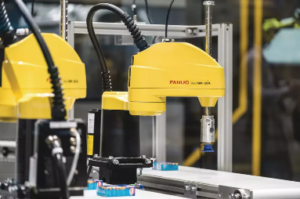 Every distribution centre faces the same pressure: more orders, more SKUs, tighter SLAs, and a shrinking pool of reliable labour. Warehouse logistics automation addresses all four simultaneously — not by replacing your workforce, but by removing the repetitive, error-prone tasks that drain capacity and create bottlenecks.
This guide cuts through the hype. It explains what warehouse logistics automation actually involves, where it delivers measurable ROI, and how to build a phased roadmap that fits your operation — whether you run a single DC or a multi-site network.
The Irish Context – What Is Warehouse Logistics Automation?
Warehouse logistics automation is the application of technology — robotics, software, sensors, and control systems — to execute and coordinate warehouse tasks with reduced human intervention. It spans the full intralogistics cycle: goods-in, storage, picking, packing, sortation, dispatch, and returns.
The term covers a wide spectrum. At one end: a basic conveyor system that removes manual tote carrying. At the other: a fully orchestrated facility where autonomous mobile robots (AMRs), automated storage and retrieval systems (AS/RS), and AI-driven warehouse execution software operate as a unified, self-optimising system.
Most operations sit somewhere in the middle — and that is exactly where the highest-value automation decisions get made.
Why Warehouse Logistics Automation Is Accelerating
Labour is the dominant cost — and the dominant constraint
In a typical distribution centre, labour accounts for 50–70% of operating costs. More critically, finding and retaining reliable pick-and-pack staff has become structurally difficult in most markets. Automation does not solve a labour problem by eliminating jobs; it solves it by reducing dependency on the hardest roles to fill consistently.
E-commerce has reset service expectations
Next-day and same-day delivery windows, combined with high return volumes, demand a level of throughput and accuracy that manual processes cannot sustain at scale. Logistics automation closes the gap between what customers expect and what human-only operations can reliably deliver.
Order profiles have fragmented
Fewer full-pallet moves. More single-item picks. More SKUs. The traditional warehouse designed around case-level fulfilment is structurally misaligned with modern demand patterns. Flexible automation — particularly goods-to-person systems and AMRs — handles high-mix, low-volume order profiles far more efficiently than static racking and walking pickers.
Data requirements have intensified
Retailers, regulators, and customers demand real-time inventory visibility, lot traceability, and SLA compliance reporting. Automated systems generate the data that manual processes cannot produce reliably or consistently.
The Core Technologies of Warehouse Logistics Automation
Autonomous Mobile Robots (AMRs)
AMRs navigate warehouse floors independently using onboard sensors and AI-driven mapping. They bring goods to operators (goods-to-person picking), transport totes between zones, or support inventory counting — all without fixed infrastructure or track modifications. Their flexibility makes them particularly suited to operations with variable layouts or seasonal volume spikes.
Best fit: Pick operations, replenishment, intralogistics transport, returns handling.
Automated Storage and Retrieval Systems (AS/RS)
AS/RS uses automated cranes, shuttles, or carousels to store and retrieve inventory at high density and speed. Modern shuttle-based systems can handle thousands of tote movements per hour from a fraction of the floor space a conventional racking system would require.
Best fit: High-throughput DCs, cold storage, operations with space constraints or high SKU counts.
Warehouse Execution Systems (WES)
Hardware alone is not warehouse logistics automation — it is warehouse logistics machinery. The WES is the intelligence layer that sits between your WMS or ERP and your physical automation. It receives high-level directives (orders, labour availability, inventory positions) and translates them into real-time decisions: what to pick, what to replenish, which robot handles which task, and in what sequence.
Without a WES, automated islands operate in isolation. With one, they operate as a coordinated system — and that is where the step-change in throughput happens.
Best fit: Any operation running multiple automation technologies that need to work in concert.
Automated Conveyor and Sortation Systems
Conveyor and sortation technology is the backbone of most high-volume fulfilment and parcel operations. Tilt-tray sorters, cross-belt sorters, and pocket sorters direct items to the correct packing station, dispatch lane, or carrier at speeds no manual sort operation can match.
Best fit: Parcel hubs, e-commerce fulfilment, cross-docking, returns processing.
Robotic Picking
Robotic picking — using vision-guided arms or purpose-built picking robots — handles the historically difficult challenge of grasping and placing varied items without human intervention. Capabilities have advanced substantially: modern systems handle a wide range of SKU shapes, weights, and packaging types.
Best fit: Piece-pick operations, packing lines, depalletising.
Vision Systems and AI-Driven Quality Control
Camera-based inspection systems verify labels, damage, fill levels, and parcel dimensions at line speed. AI classifiers flag exceptions for human review rather than passing problems downstream. In returns processing, vision systems can assess condition and route items automatically.
Best fit: Inbound quality control, packing verification, returns triage.
Where Warehouse Automation Delivers the Highest ROI
Not all automation investments are equal. ROI is highest where:
1. Volume is high and repetitive. Automation rewards consistency. A task performed 10,000 times per shift is a far better automation candidate than one performed 20 times.
2. Accuracy has a high cost of failure. A mispick in a regulated pharmaceutical DC or a mislabelled parcel generating a customer return and a credit — these have quantifiable costs that automation directly addresses.
3. Labour is expensive or difficult to source. Markets with high minimum wages or tight labour pools compress payback periods significantly.
4. Space is constrained. AS/RS and goods-to-person systems can triple or quadruple storage density versus conventional racking, deferring or eliminating costly facility expansions.
5. Multiple shifts run simultaneously. Automated systems do not require shift premiums, do not fatigue, and do not call in sick. The ROI case for automation strengthens with every additional shift the equipment runs.
Building Your Warehouse Logistics Automation Roadmap
Step 1: Measure your baseline
OEE (Overall Equipment Effectiveness) is the right starting metric for automated lines. For manual operations, measure labour productivity (units per labour hour), order accuracy rate, and fulfilment cycle time. You cannot improve what you have not measured.
Step 2: Map your constraint
Automation applied to your bottleneck delivers system-wide throughput improvement. Automation applied elsewhere delivers local efficiency gains only. Walk your process flow and find where work accumulates — that is where automation earns its return.
Step 3: Define your order profile
Are you primarily picking cases, eaches, or pallets? What is your average order size? How many SKUs? How seasonal is your volume? The answers determine which automation technologies fit — a 2,000-SKU fashion DC and a 200-SKU industrial parts DC need very different solutions.
Step 4: Plan for integration from the start
Insist on open APIs and standard communication protocols (REST, MQTT, OPC-UA) from every vendor. A WMS that cannot talk to your AMR fleet, which cannot talk to your WES, is not an automated warehouse — it is a collection of automated silos.
Step 5: Phase your investment
Rarely does it make sense to automate everything at once. A common and effective phasing approach:
| Phase | Focus | Typical technologies |
|---|---|---|
| 1 | Bottleneck relief | Conveyor, sortation, AMR transport |
| 2 | Pick accuracy and speed | Goods-to-person, pick-to-light, voice |
| 3 | Storage density | AS/RS, shuttle systems |
| 4 | Full orchestration | WES, AI-driven slotting, predictive replenishment |
Step 6: Invest in your people
Automation changes roles — it does not eliminate them at the DC level. Operators become robot supervisors. Supervisors become workflow coordinators managing orchestration dashboards. Training investment is as important as capital investment.
Common Mistakes in Warehouse Logistics Automation Projects
Automating a broken process. Automation amplifies what exists. If your slotting strategy is inefficient, automating it makes the inefficiency faster and harder to fix. Optimise the process before automating it.
Underestimating integration complexity. The machines are rarely the difficult part. Connecting them to your WMS, ERP, and carrier systems — and keeping those connections stable through software updates — is where projects stall.
Buying for today’s volume only. Automation infrastructure has a 10–15 year lifespan. Design for peak volume two business cycles out, not current average throughput.
Skipping the pilot. A structured pilot in one zone or one shift validates the business case, surfaces integration issues, and builds operator confidence before full deployment.
Frequently Asked Questions
Is warehouse logistics automation only viable for large operations?
No. AMRs, modular conveyor systems, and entry-level WES platforms have lowered the threshold substantially. A single-site operation running 1,000 orders per day can build a credible automation business case today. The key is targeting the right constraint rather than trying to automate everything.
What is a realistic payback period?
AMR deployments typically return investment in 2–3 years. AS/RS systems with larger capital requirements often show 4–6 year paybacks, though labour savings in high-wage markets compress that. Sortation and conveyor systems typically sit in the 2–4 year range.
How does warehouse automation affect headcount?
Most operations see headcount stabilise rather than fall sharply — automation absorbs volume growth without proportional hiring rather than reducing current staff. Roles shift toward higher-skill, higher-pay positions managing and maintaining automated systems.
What is the difference between a WMS and a WES?
A WMS (Warehouse Management System) manages inventory, orders, and labour at a strategic level. A WES (Warehouse Execution System) manages physical execution in real time — directing robots, conveyors, and operators moment by moment. In an automated facility, both are necessary; neither alone is sufficient.
The Bottom Line
Warehouse logistics automation is no longer a future-state aspiration for large 3PLs and e-commerce giants. The technology is accessible, the ROI is demonstrable across a wide range of operation sizes, and the labour and service-level pressures that make the case are universal and intensifying.
The operations that build their automation roadmap now — starting with their real constraints, planning for integration, and phasing investment sensibly — will be structurally better positioned than those that wait. The gap between automated and manual operations compounds every year.