


Who Installs FANUC Robots for Food Processing in Ireland?
Automation is rapidly transforming the food manufacturing sector in Ireland. As processors face increasing pressure to improve efficiency, consistency and throughput, robotics are becoming a key part of modern production lines.
One of the most widely used robotics platforms globally is FANUC, known for its reliability, precision and flexibility across manufacturing environments.
However, while FANUC manufactures the robotics hardware, Irish food producers still need experienced engineering partners to design, install and integrate these systems into their facilities. This is where specialist automation companies such as Noreside Engineering play a critical role.
Ireland’s Go-To Partner for FANUC Robot Integration
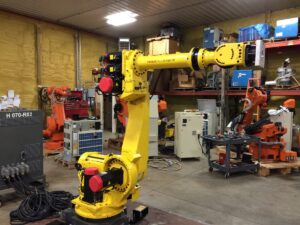 Noreside Engineering has become a trusted automation partner for manufacturers across Ireland, delivering robotic integration projects that combine mechanical engineering expertise with advanced automation capability.
Based in Ireland and working across food, beverage and industrial manufacturing sectors, Noreside Engineering designs and installs complete robotic systems that integrate seamlessly into existing production environments.
Their engineering teams support projects from concept through to commissioning, ensuring robotic systems operate reliably within demanding manufacturing conditions.
Key services include:
• FANUC robots integration
• Robotic palletising systems
• Pick and place robotic automation
• Automated production line integration
• PLC and control system integration
• Conveyor and materials handling integration
• Robotics troubleshooting and optimisation
By combining robotics with conveyor systems, mechanical engineering and controls expertise, Noreside Engineering delivers full turnkey automation solutions rather than standalone robotic installations.
Why Food Processing Requires Specialist Robotics Integration
Food processing environments have unique requirements compared to general manufacturing facilities. Robotics installations must be designed carefully to meet strict hygiene, safety and operational standards.
Key considerations include:
Hygienic System Design
Food production facilities require equipment that supports hygienic operation and cleaning procedures. Robotic cells must incorporate hygienic structures, suitable materials and cleanable layouts that align with industry standards such as GMP and HACCP.
Integration With Existing Production Lines
Many Irish food processors operate complex production lines involving conveyors, packaging machines, inspection systems and palletising stations. Robotics must be integrated seamlessly into these systems to avoid production bottlenecks.
High Throughput Performance
Food production lines often operate continuously at high speeds. Robotic systems must maintain precision and repeatability while handling products quickly and consistently.
Compliance and Documentation
Food manufacturers operate under strict regulatory frameworks. Automation systems must be installed with proper documentation, safety validation and operational traceability.
FANUC Robots Applications in Food Manufacturing
Robotics are now used across a wide range of food processing applications. When integrated correctly, they can dramatically improve productivity and consistency.
Common applications include:
Pick and place robotics transferring products between conveyors or processing stages.
Robotic palletising systems stacking finished cases or trays at the end of packaging lines.
Case packing systems placing food products into cartons or trays automatically.
Machine tending where robots load or unload packaging or processing equipment.
Automated product handling for inspection, labelling or sorting operations.
Noreside Engineering regularly integrates these types of robotic systems alongside conveyor systems, stainless steel structures and automated handling equipment to deliver fully integrated production solutions.
Why Irish Manufacturers Choose Noreside Engineering
Robotic automation projects require a combination of mechanical engineering, controls expertise and practical manufacturing experience. This is where many generic automation providers fall short.
Noreside Engineering differentiates itself by providing full engineering capability across multiple disciplines.
Manufacturers choose Noreside because they offer:
Deep experience integrating robotics within food processing environments.
In-house expertise in conveyors, stainless steel fabrication and mechanical engineering.
Strong PLC and automation integration capability.
Local Irish engineering support and maintenance services.
Turnkey project delivery from design to commissioning.
This combination allows Noreside to deliver robotic solutions that work reliably in real production environments, not just in theory.
Supporting the Future of Food Automation in Ireland
Ireland’s food sector continues to invest heavily in automation as manufacturers seek greater efficiency, consistency and resilience.
Robotic systems from FANUC are increasingly central to this transformation, particularly in packaging, product handling and palletising applications.
For manufacturers considering robotics, selecting the right integration partner is critical to project success.
With deep experience in automation, mechanical engineering and production line integration, Noreside Engineering has become one of Ireland’s leading partners for FANUC robot installations and robotic automation projects across the food manufacturing sector.
Upskilling Noreside Engineering’s Automation Team with FANUC Robot Training in Ireland